Changing a radiator or its valves, stopping a weeping joint or moving a position: what drains down, the details to send and the checks made after refilling.
This service changes the radiator side of a wet heating system: the panels or towel rails, their valves and the short runs of pipe that feed them. Faults at the appliance are covered under boiler repair.
What the job involves
A like-for-like swap can reuse the position if height, width between pipe centres and brackets agree. A different size means altering pipework, which may involve lifting floorboards or opening a wall. Valve replacement requires the water to be lowered or the pipe held off by another suitable method. A leaking radiator body is normally replaced, whereas a weeping union or gland may be repairable.
After work the system is refilled, air is released and inhibitor is restored where water has been lost. Choosing a size for a room is covered in the radiator guides.
What we need from you
- A photo of each radiator, both valves and the floor or wall where pipes emerge.
- Width, height and pipe centre distance.
- Whether the system has a pressure gauge or a feed tank.
- New radiator or valve product details if purchased.
- Whether there are other drips, cold spots or sludge-coloured water.
Safe first steps
For a drip, put a shallow tray and cloth under the joint and turn the heating off so it can cool. Closing the control valve does not seal the radiator on its own, since the return valve also has to be shut, with turns counted so the setting can be restored. Do not try to tighten a corroded union with force. Never remove a radiator that is still hot or full.
Protect carpets: system water stains badly.
How it is checked
Joints are inspected cold and again with the system hot, because some seep only after expansion. Both valves are operated through their range. The radiator is felt for even warmth and bled once more. On a sealed system the pressure is brought back to the maker's marked range and watched. The radiator should sit securely on its brackets with the vent reachable.
Radiator and towel rail details
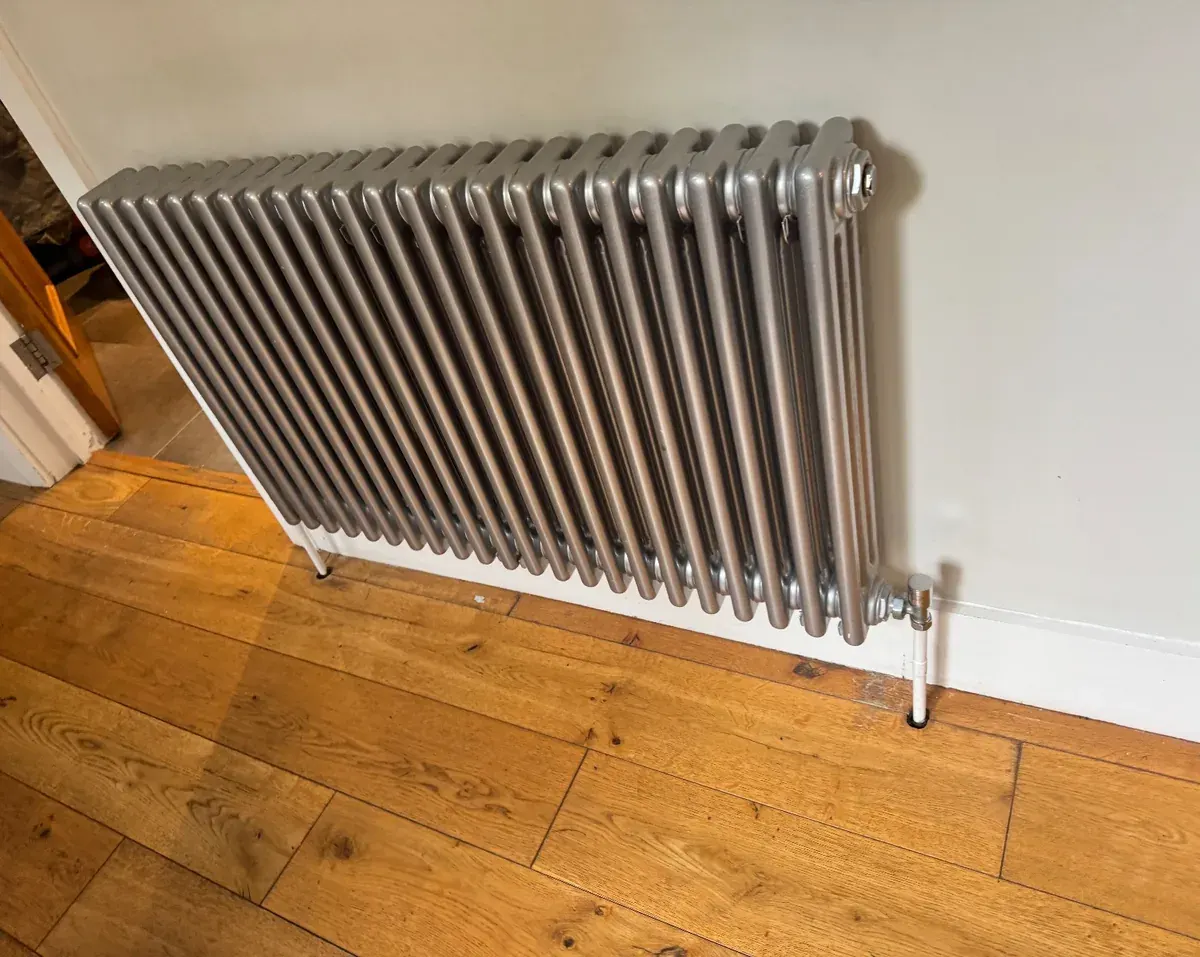
Sizing and fit questions include heat output for a room, valve types, valve extensions, brackets and wall fixings, vertical models, heavy column models, rerouting the pipes and taking one down to decorate.
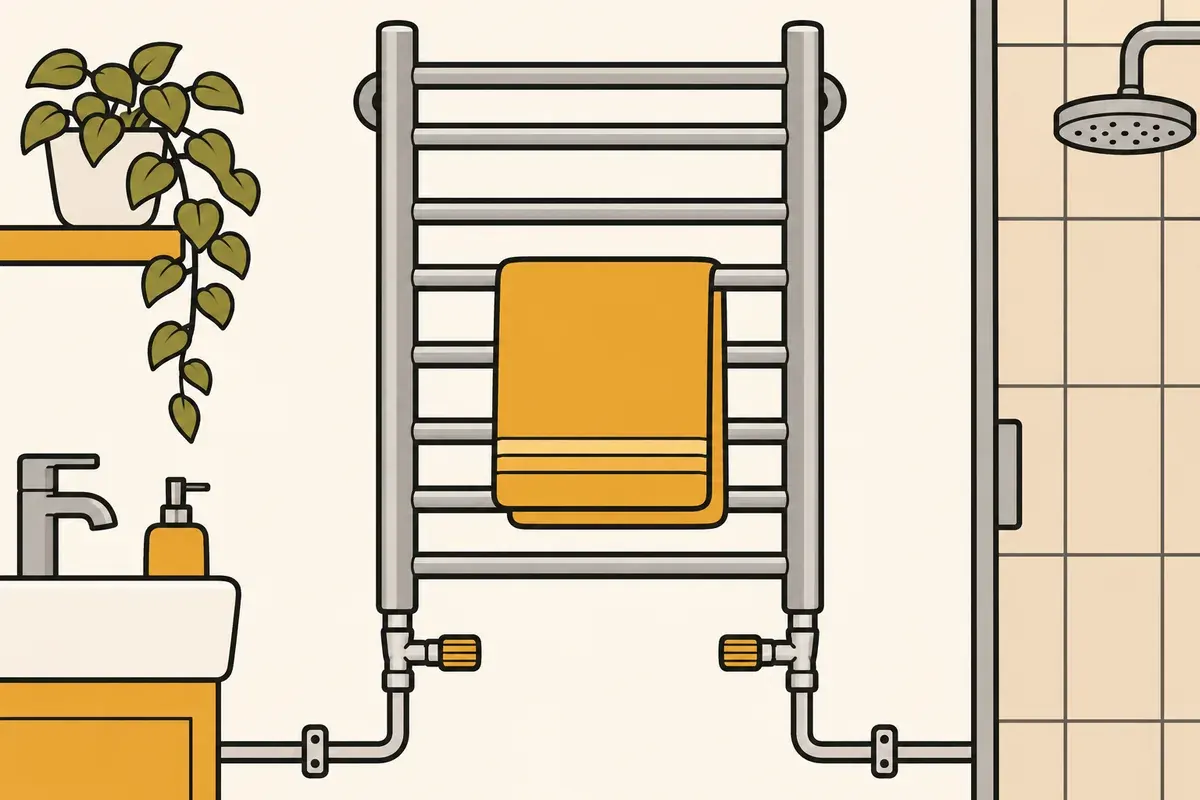
Towel rails add sizes and pipe centres, dual fuel set-ups, electric-only rails and bleeding trapped air.
Balancing and other causes
A new radiator can change how heat is shared around the circuit, so ask whether balancing is part of the job. Persistent cold areas across several radiators may point to sludge or to a pump or control fault, which is a central heating repair.
Agree beforehand
How much of the system will be drained, how floors and decoration will be left and who disposes of the old radiator. Send your list through the contact form.
Moving a radiator
Name the new position and check that curtains, furniture and doors will leave it clear. The wall must carry the filled weight, and the pipe route may depend on joist direction or a solid floor.