Mains pressure hot water cylinders: the safety devices fitted, why a dripping discharge matters, notification for new installations and what details to send.
An unvented cylinder stores hot water at mains pressure with no open vent and no feed tank in the loft. Work on it is carried out only by G3 qualified engineers, and cylinder specialists are available for these jobs.
Recognising one
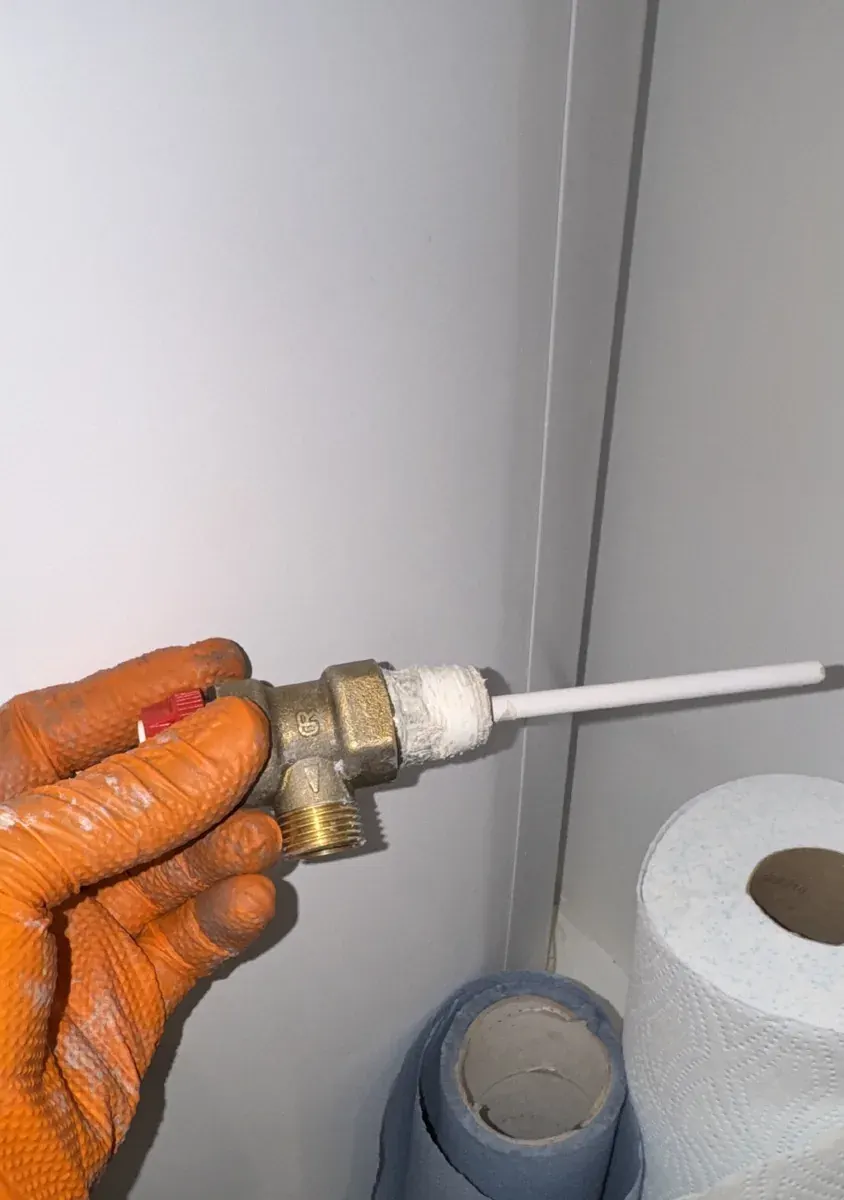
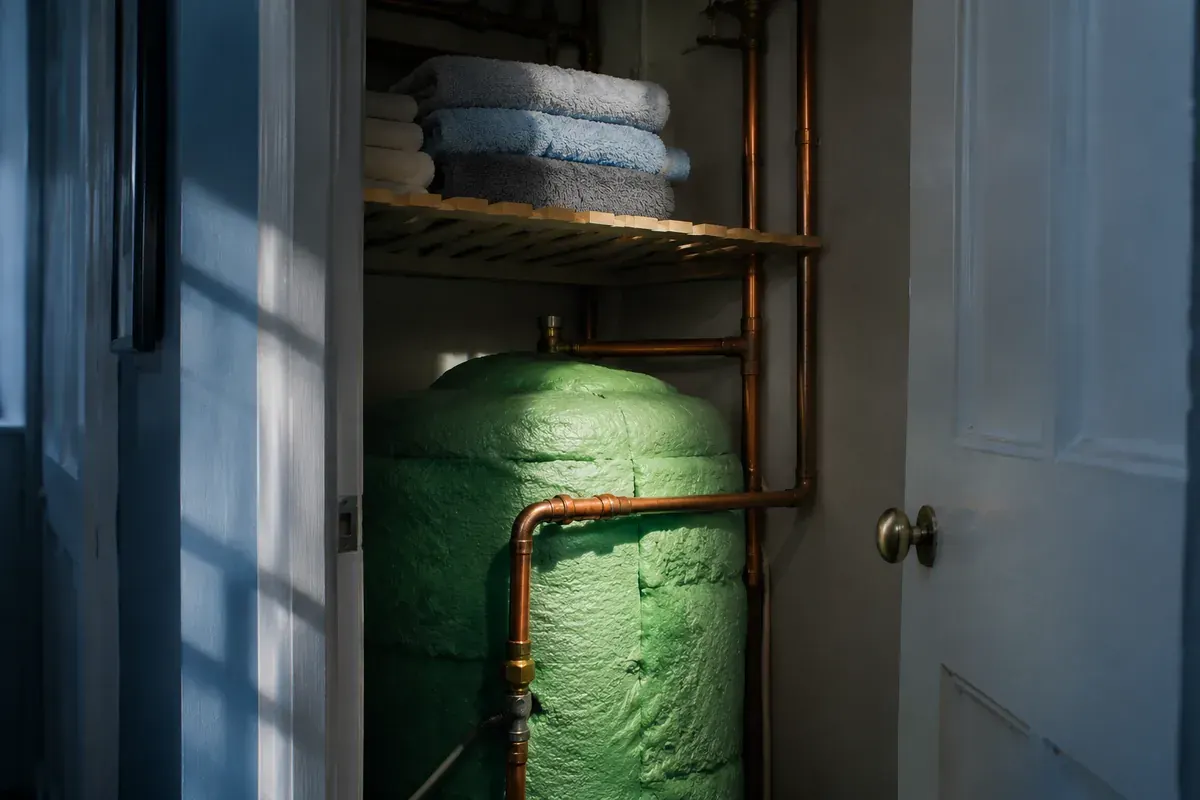
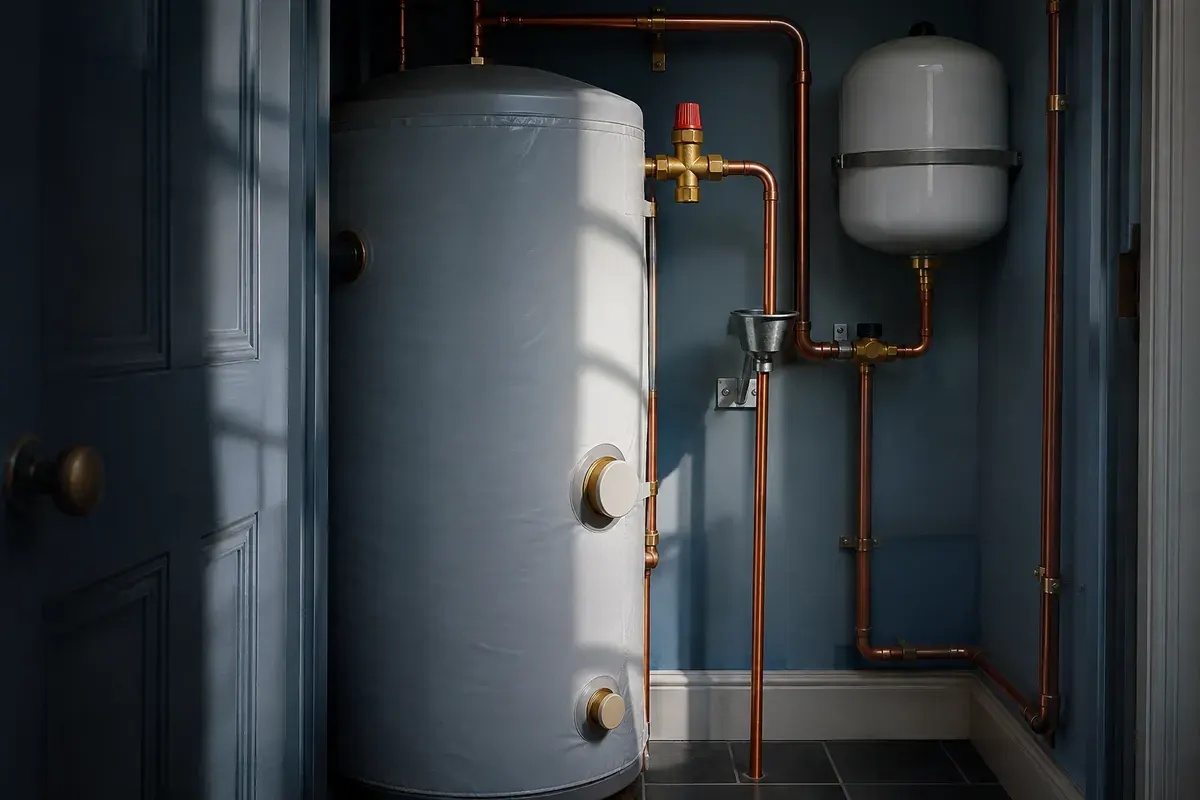
Look for a factory-insulated cylinder with a warning label, a pressure reducing or control set on the cold inlet, an expansion vessel or internal air gap and relief valves piped to a small open funnel called a tundish. The pipe below the tundish carries any discharge to a safe place.
Why the safety parts matter
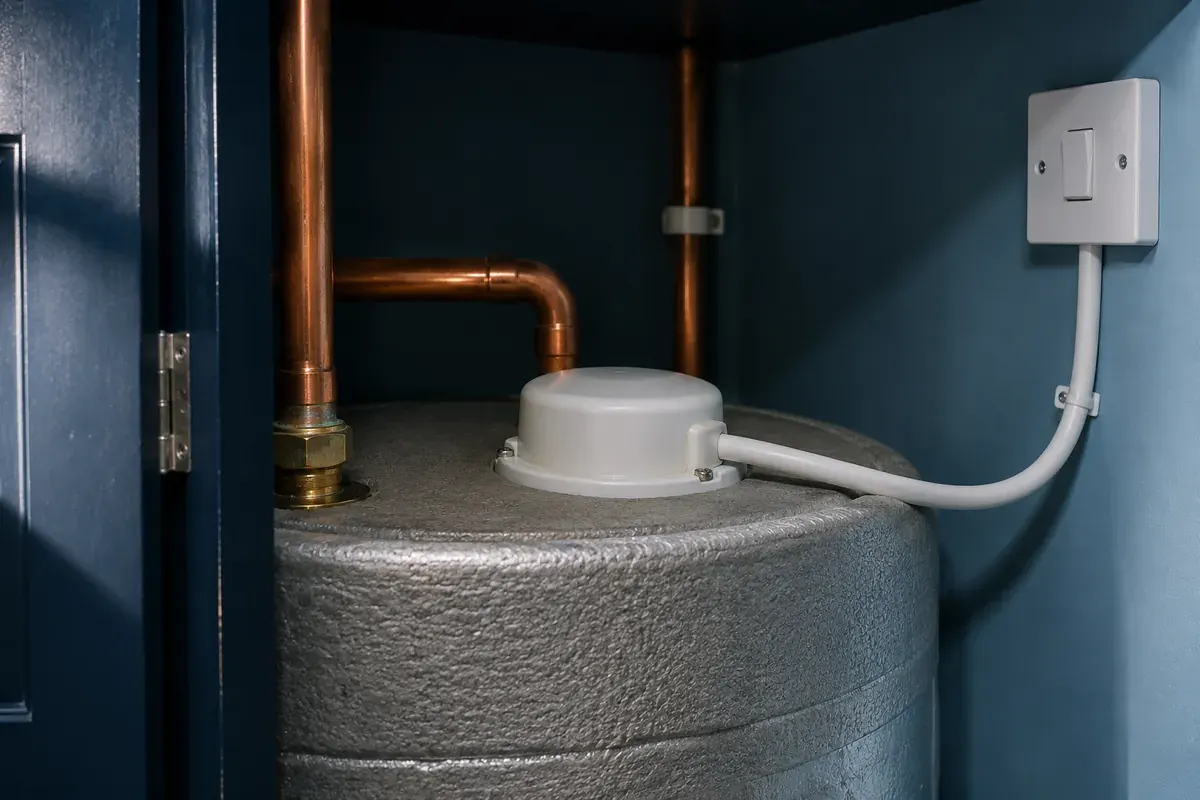
Building regulations guidance for England says these systems need at least two independent safety devices in addition to the ordinary thermostat. A typical arrangement is a cut-out that does not reset itself and a temperature relief valve. They exist to stop stored water overheating. Nobody unqualified should adjust, replace, move or block them.
Signs to report
- Water running or dripping at the tundish, in bursts or constantly.
- Hot water that is far hotter than usual, or steam.
- Pressure at taps that surges and fades.
- A cut-out that has tripped, leaving no hot water.
- Damp around the base or at connections.
Continuous discharge, steam or boiling noises need urgent attention. Keep clear, turn off the immersion at its switch and the heating at its control if safe, and do not wait on a web form.
Servicing
Manufacturers publish their own maintenance schedules, commonly covering the relief valves, the expansion arrangement, the inlet strainer and the discharge route. Find the manual or the label and ask for the visit to follow it. Keep the written record with the cylinder.
Replacement and new installations
Installing an unvented system is notifiable building work. An installer registered with a competent person scheme for this work can certify it; otherwise building control must be told before the work starts. Ask which applies. Before choosing a new cylinder, check:
- Mains flow and pressure measured at the property.
- Capacity against the number of baths and showers.
- A route for the discharge pipe with a continuous fall to a safe termination.
- Floor strength and access for the filled weight and size.
- The heat source: boiler coil, immersion or both. Any gas boiler work needs a Gas Safe registered engineer.
What to send
Photograph the cylinder label, the whole cupboard, the valve set and the tundish, then email the pictures with your enquiry reference. Add the age if known, the date of the last service, the symptom and the postcode. Say whether the home is a flat, because shared mains and drainage can limit the options.
Questions before agreeing
Ask who is attending and what their G3 qualification covers, how long hot water will be off, which parts are being replaced and what paperwork you will receive. Check any manufacturer guarantee conditions before parts from another source are fitted.
Questions people ask
Water is coming into the tundish. Can I cap the pipe?
No. Never cap, plug or restrict a discharge pipe or a relief valve. Switch off the heat to the cylinder if you can do so safely and have a G3 qualified engineer look at it.