A stiff, seized, leaking or missing shut-off valve: how replacement is planned, where outside control matters, safe handling and how the new valve is proved.
A stop valve lets you turn off the cold water to a home; smaller isolation valves shut off one tap or appliance. This service repairs, replaces or adds them so that later work and leaks can be controlled.
Finding it
Look under the kitchen sink, in a utility or airing cupboard, beneath the stairs, near the front door or where the supply pipe enters. Flats may have the valve in a shared riser. There is often a second control outside under a small cover, which may belong to the water company. Label whatever you find.
What the job involves
The obstacle in replacing a stop valve is that the water has to be off upstream of it. That may need an outside valve to be operated, the water company or a building manager, or another suitable isolation method on the pipe. This is settled before the old valve is touched. The pipe material and size are identified, since lead and older imperial pipe need appropriate adapters. A weeping gland can sometimes be remedied without replacing the whole valve.
Adding a local valve is simpler: see service valves on taps.
What we need from you
- A close photo of the valve and a wider one of its surroundings.
- Whether it turns, partly turns or does not move.
- Whether the water stops completely when it is closed.
- Where the outside control is, if you know it.
- Building manager contact for any shared supply.
Safe first steps
Test gently. Turn clockwise by hand without a long lever, then open fully and turn back a quarter turn so it is less likely to jam in that position. If it will not move, stop: snapping the spindle or twisting the pipe turns a stiff valve into a flood. A little penetrating fluid on the spindle is sometimes tried, but keep it away from drinking water openings. If a valve starts leaking as you turn it, note its position, catch the water and get help before forcing it further.
Do not lift or operate street covers that you are not entitled to use.
How it is checked
With the new or repaired valve closed, a cold tap fed from the mains is opened and should run down to nothing. The valve is reopened slowly, joints and spindle are inspected under pressure and flow is compared with before. Check that the handle clears cupboard contents and can be reached quickly.
Preparing for other work
Isolation often comes up alongside other jobs, such as adding service valves before a tap change, a list of jobs before moving in and the tools used for tap, trap and toilet work.
Choosing a replacement
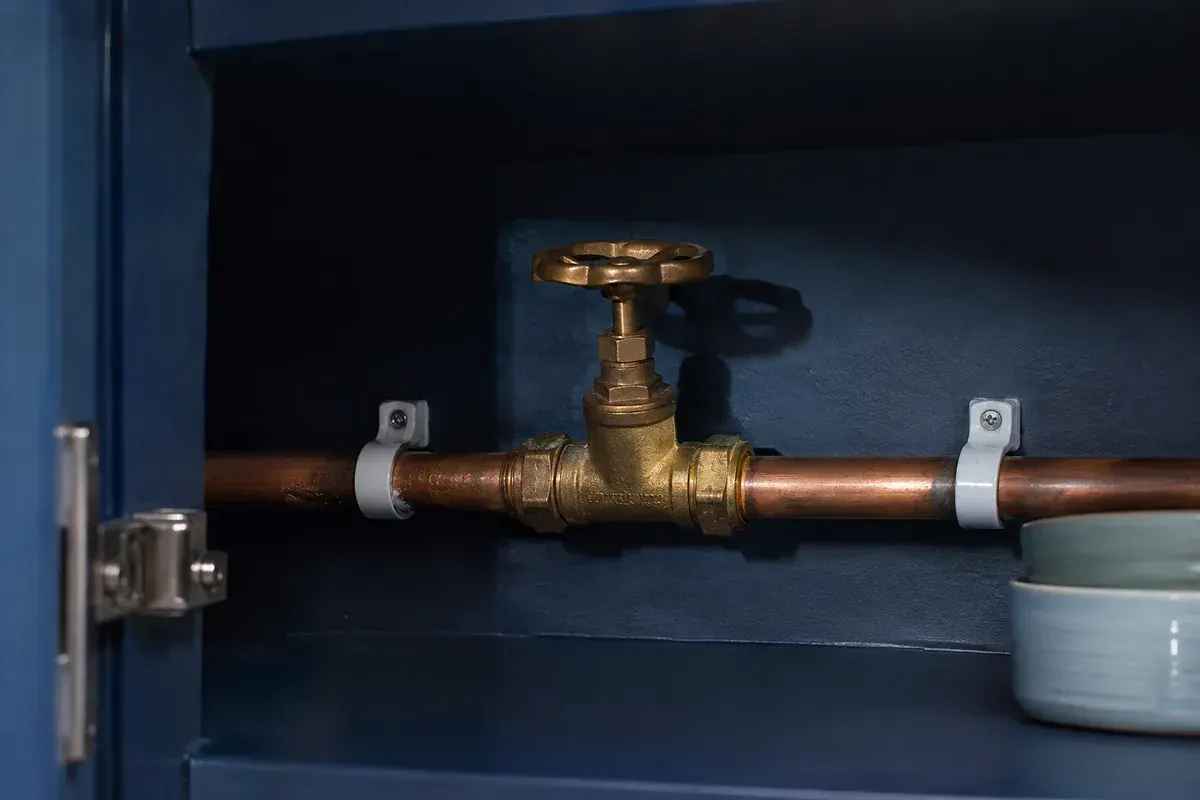
Traditional wheel-head stop valves and lever or quarter-turn types both exist. Ask which is proposed, whether it is approved for use on a drinking water supply and whether a drain valve should be added just above it so the pipes can be emptied.
Afterwards
Show everyone in the household where it is and which way it closes. Exercise it now and then. Send your notes through the contact form.