How to stop water from a split or dripping pipe, what a lasting repair involves, the details to send us and the checks made once the supply is back on.
Repairing a damaged pipe means isolating it, cutting out or remaking the failed part and restoring the water under observation. Your first job is simply to stop the flow.
Safe first steps
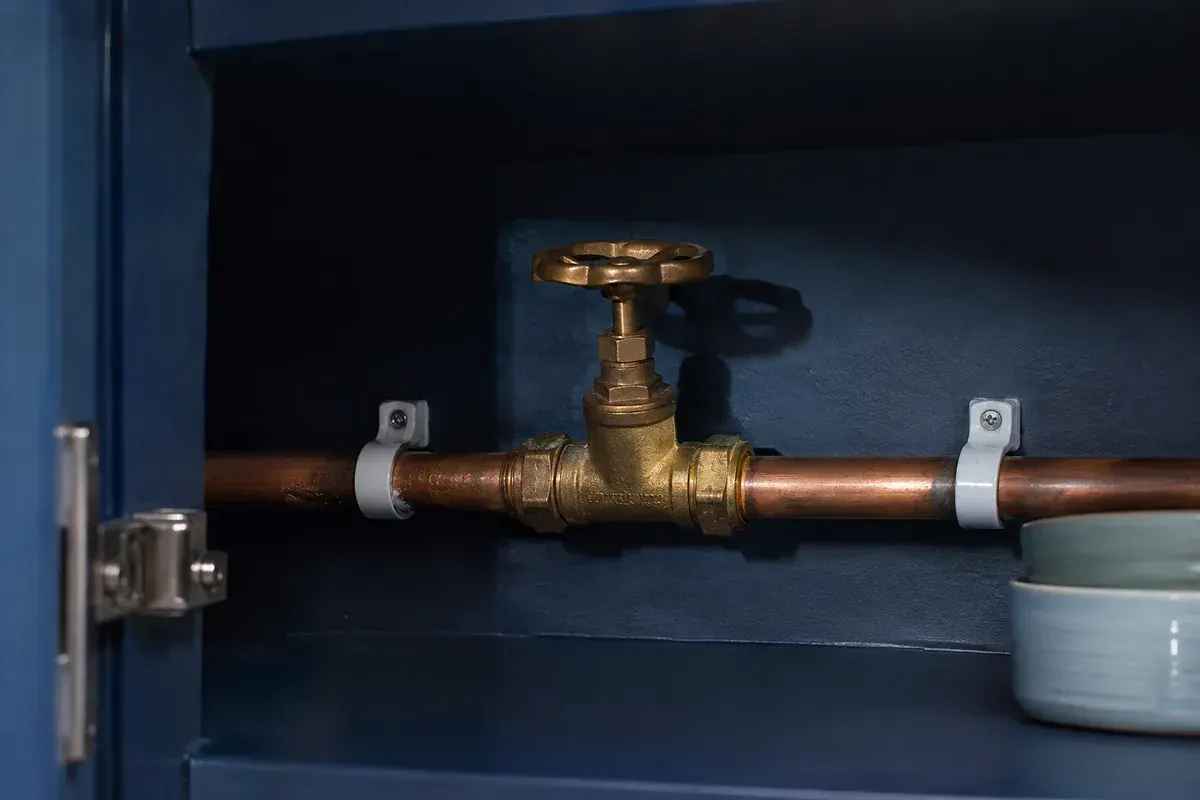
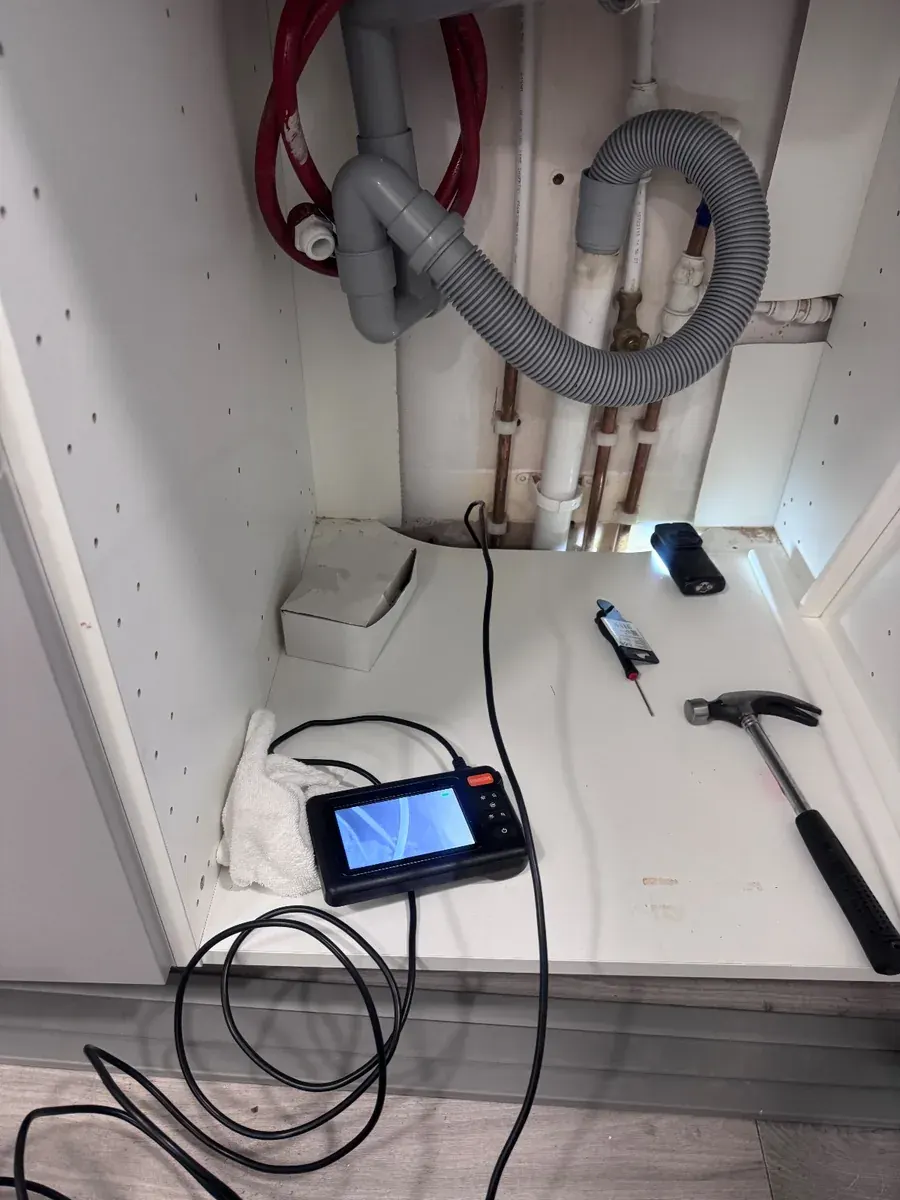
- Close the internal stop valve, clockwise. It is often under the kitchen sink, near the front wall or in a utility cupboard.
- Open cold taps to drain the pipes and reduce what comes out of the split.
- If the hot side or a tank is involved, close the valve on its feed if you know which it is, and turn off any immersion heater.
- Keep away from wet electrics and sagging plasterboard.
- Put a container under the leak and wrap the area with cloth to steer water into it.
Water that cannot be stopped needs somebody on site at once, and your water company if the fault is on the supply outside. A web enquiry is not the route for that.
For a heating pipe, turn the heating off. Do not touch gas pipes; if you smell gas, leave and ring 0800 111 999 from outside.
What the job involves
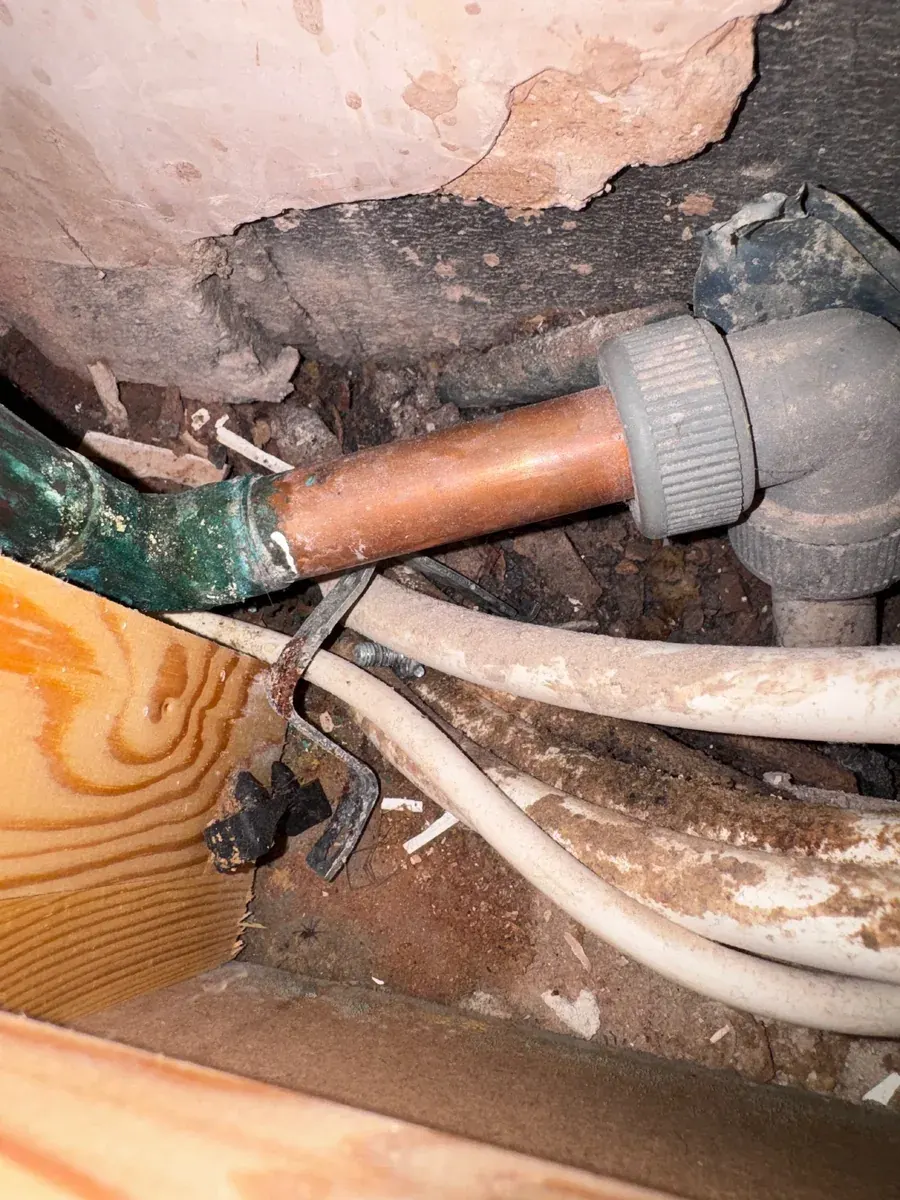
The pipe is traced and identified by material and size: copper, plastic, older steel or lead. The damaged length is cut back to sound pipe and replaced with matching or properly adapted fittings. Tapes, putty and clamp-on sleeves are holding measures. The cause matters too, whether that is freezing, corrosion, a nail, a pipe rubbing on timber or a joint under strain, because the same weakness may sit further along the run.
Where lead pipe is found, say so and ask about replacement options. Joining new metal to old lead needs the right fitting.
What we need from you
- Whether the water is now off, and what else lost supply when you closed it.
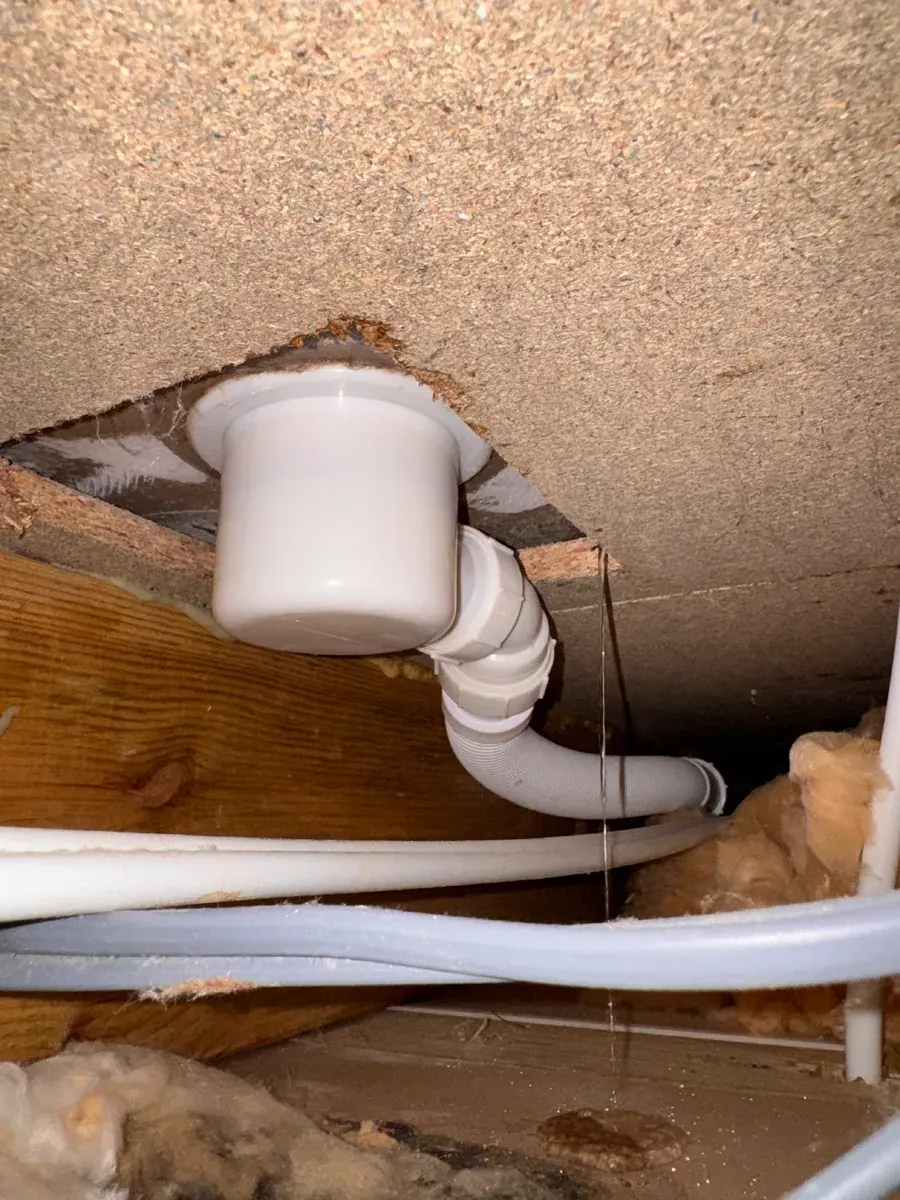
- Photos of the damage and of the pipe on both sides.
- Where it is: loft, under floor, in a wall, behind an appliance, outdoors.
- Who else must be told, such as the freeholder or the flat below.
- Any temporary repair already applied.
How it is checked
Valves are opened slowly with taps partly open to release trapped air. The new joints are wiped dry and watched while the pipe is under full pressure and again after hot and cold have been run. Pipe clips are refitted so the run is supported. On a sealed heating system the gauge is read before and after.
Ask whether the repair is permanent or a holding measure, and what remains to be done.
Reducing the chance of a repeat
Insulate exposed pipes in unheated spaces, leaving no gaps at bends and valves, and make sure everyone at home knows where the stopcock is. If a leak is suspected but nothing is visibly broken, see leak detection. Otherwise send the notes through the contact form.