
Outside and extras
Plumbing beyond the kitchen and bathroom: planning a utility room, filling a hot tub safely and adding a dog wash, with the water and drain checks for each.
Reading
In this section
- Utility-room dog shower plumbingDog wash station plumbing: hose and backflow protection, safe water temperature, a trap that catches hair, drain connection, frost and easy cleaning access.
- Adding a toilet or sink to a garageGarage toilet and sink planning: check approvals for conversion, floor level and drain route, frost protection, ventilation, fire separation and water.
- Water and waste to a garden roomGarden room plumbing: check building rules, drain distance and fall, frost-safe water pipes, notification, power, ventilation and how to isolate in winter.
- Filling and draining a hot tub safelyHot tub water supply explained: backflow risk from hoses, asking the water company, safe filling points, where the water drains and frost protection notes.
- Backflow protection for irrigation and hosesIrrigation tap backflow protection: how hose and watering system risks are rated, which devices may apply, when to notify the water company and what to check.
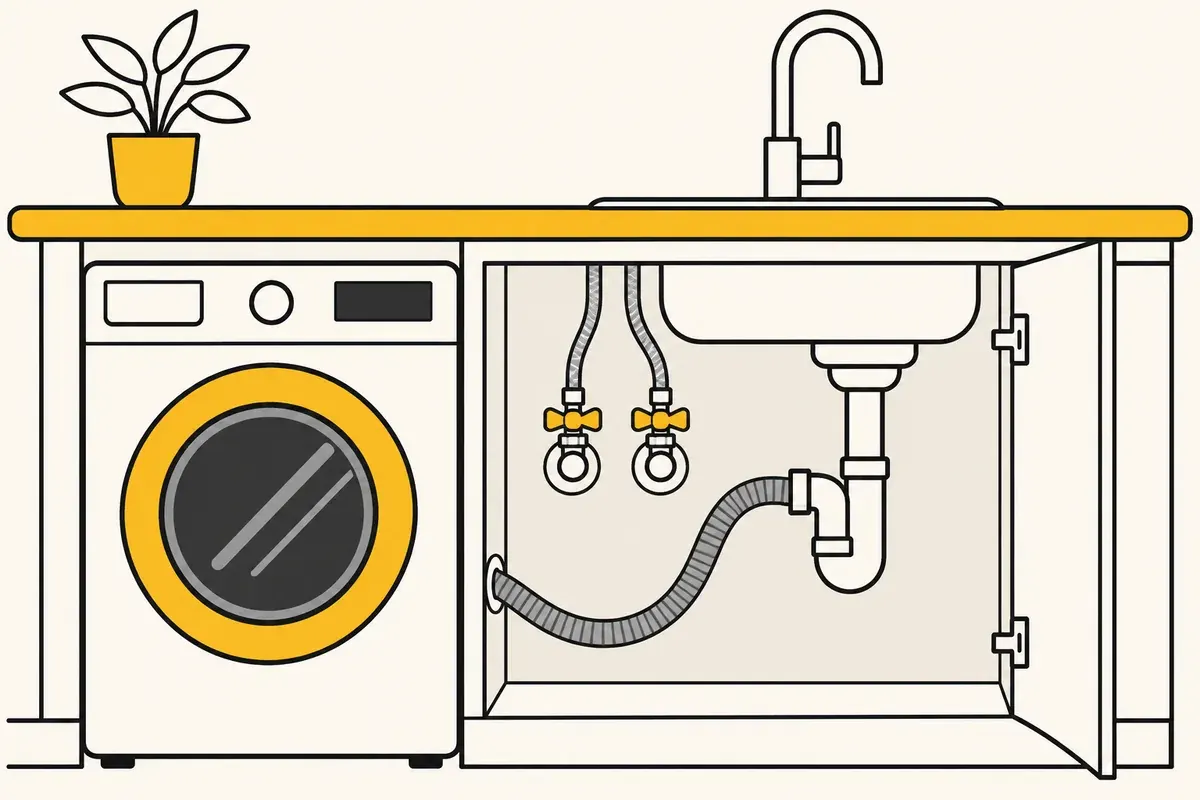
- Laundry cupboard: tray, trap and ventilationLaundry cupboard plumbing for a washer or dryer: space for hoses, trapped waste, accessible valves, leak tray options, ventilation, power and floor support.
- Planning utility room pipeworkUtility room plumbing planned before fit-out: appliance list, waste route and fall, cold and hot feeds, valves, ventilation, frost protection and access.
- Connecting a water butt and overflowWater butt overflow connection: choose a diverter or overflow kit, set height level, support the full weight, route surplus safely and protect from frost.
- Space and drain checks before buying a softenerWater softener space requirements to check before you buy: cabinet size, salt access, drain and overflow routes, power, hard water drinking tap, notice.
Some plumbing sits outside the usual two rooms: a laundry corner, a washing point for the dog, a garden spa. Each one raises the same pair of questions. Where does clean water come from without risk of backflow, and where does the used water go?
Pick your project
| You are planning | Read | Settle first |
|---|---|---|
| A room for laundry and a second sink | Utility room plumbing | Waste route and extract |
| Water for a hot tub | Hot tub water supply | How it is filled and emptied |
| A washing station for pets | Dog wash station plumbing | Backflow, mixing and hair in the waste |
Rules that apply outside too
The water fittings requirements cover fittings supplied from the public main whether they are indoors or not. They expect backflow protection suited to the risk, protection from freezing and enough valves to isolate parts for maintenance. Some work also needs notice to the water company before it starts, including certain pipes laid outside a building at unusual depths.
Used water from sinks and showers belongs in the foul drain. Check before connecting anything to an outside gully, because misconnections to surface water carry waste to local waterways.
Before you enquire
Note where the stopcock is, which outside walls are available, whether the space is heated and who owns the building. Email those details and a few photographs, having first outlined the problem on the contact form. Electrical supplies and groundworks are separate matters, and gas pipes or appliances outdoors need a Gas Safe registered engineer.
Keep reading
Related
- Kitchen and utilityPlanned kitchen and utility room plumbing: appliance waste and water connections, valves, sink traps, disposal units and dryer drains, with checks first.
- Making a compression jointHow to use a compression fitting: cut and deburr the pipe, place nut and olive, hand tighten, add the correct spanner turn, avoid overtightening and test.
- Which photos to send for a plumbing jobA room-by-room photo checklist for plumbing enquiries: which wide and close shots to take, what labels help, safe habits and privacy before you send them.
One list, however many jobs
Add what needs fitting or replacing, tell us the postcode, then email photos.