
Radiators and towel rails
Guides to bleeding a towel rail, taking a radiator off to decorate and telling radiator valve types apart, with the points where you should stop.
Reading
In this section
- Heavy column radiators: feet and wall staysColumn radiator installation: check filled weight, floor feet and wall stays, stud or masonry brackets, flow side, pipe centres, sealing and refilling.
- Dual-fuel towel rails: plumbing and electricsDual fuel towel radiator installation: element sizing, valves, filling and expansion room, bathroom electrics with RCD protection and safe summer use.
- Electric-only towel rails: who fits themElectric towel rail installation covers sealed electric and element-filled rails: fixed wiring, bathroom zones, filling for expansion and who should connect it.
- How to bleed a towel radiatorHow to bleed a towel radiator: confirm trapped air, open the vent safely, close it at the first steady water and check system pressure afterwards.
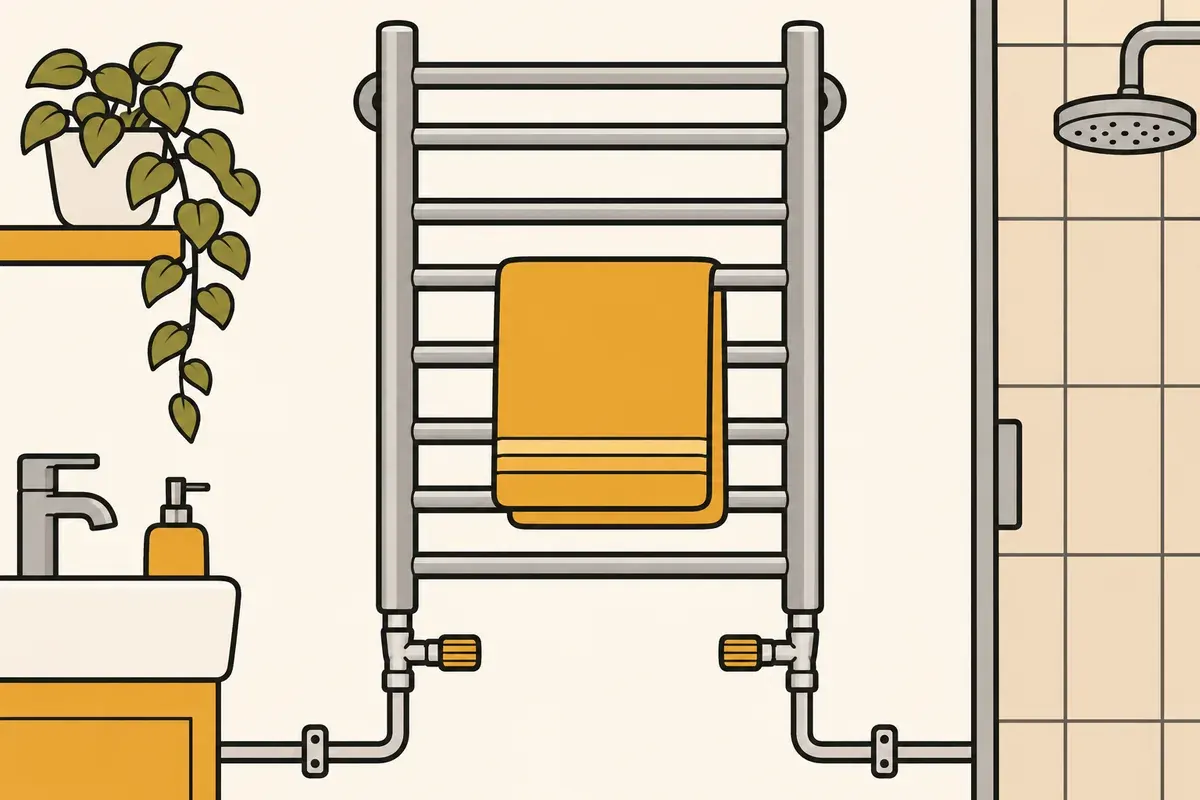
- How to remove a radiator for decoratingHow to remove a radiator for decorating: close both valves, count the turns, drain and lift it safely, protect the pipes, refit and bleed the air.
- Radiator brackets and fixing into plasterboardRadiator brackets replacement: match bracket type, find solid fixing points, deal with plasterboard, carry the water-filled weight and rehang level safely.
- How to size a radiator for a roomRadiator BTU room sizing explained: room heat loss, walls, windows and insulation, watts and BTU conversion, ΔT50 ratings and low temperature systems.
- Rerouting radiator pipes neatlyRadiator pipes through floor or wall: plan new positions, respect joist notch limits, protect and insulate pipes, avoid hidden joints, test and make good.
- Valve extensions when a new radiator is narrowerRadiator tails and extensions explained: measure pipe centres and valve gap, choose extension length and thread, seal correctly and know when to move pipes.
- Radiator valve typesRadiator valve types explained: manual, thermostatic and lockshield controls, angled, straight and corner bodies, and what to measure before buying.
- Sizing a towel railTowel radiator sizes and pipe centres: measure existing pipes, allow for valves, check height, projection, brackets and heat output before ordering.
- Vertical radiators: wall strength and pipe tailsVertical radiator installation checks: wall type and fixings, flow side, pipe centres, valve clearance, draining and refilling the system and balancing after.
These guides cover the water side of radiators and heated towel rails: the radiator body, its two valves and the air that collects inside it. For the appliance itself, see boiler repair; gas work is carried out only by Gas Safe registered engineers.
| Job | Guide | Drains water? |
|---|---|---|
| Release trapped air from a towel rail | How to bleed a towel radiator | A few drops |
| Paint or paper behind a radiator | Removing a radiator for decorating | The radiator only |
| Work out which valves you have | Radiator valve types | No |
| Fit a new towel rail | Towel radiator fitting | Often the system |
Know your system first
A sealed system has a pressure gauge, normally on or near the boiler, and may need topping up if the pressure falls after water is let out. An open-vented system is fed from a small tank, usually in the loft. If you cannot tell which you have, or do not know how it refills, find out before opening any joint.
Black water, repeated air, falling pressure or cold patches that stay after bleeding point to a system fault. Ask a competent heating engineer to look at it.
Keep reading
Related
- Towel radiatorTowel radiator installation checks: heating-fed, electric or dual-fuel, pipe centres, wall fixings, draining the system, bathroom electrics and commissioning.
- Measure before you buyA fit-check sheet for appliances, trays, toilets, basins, taps, wastes and radiators: dimensions to record before buying and checks against product drawings.
- Which photos to send for a plumbing jobA room-by-room photo checklist for plumbing enquiries: which wide and close shots to take, what labels help, safe habits and privacy before you send them.
One list, however many jobs
Add what needs fitting or replacing, tell us the postcode, then email photos.