A damp patch, a dropping pressure gauge or a meter that will not rest: how the source of a plumbing leak is narrowed down, opened up, repaired and checked.
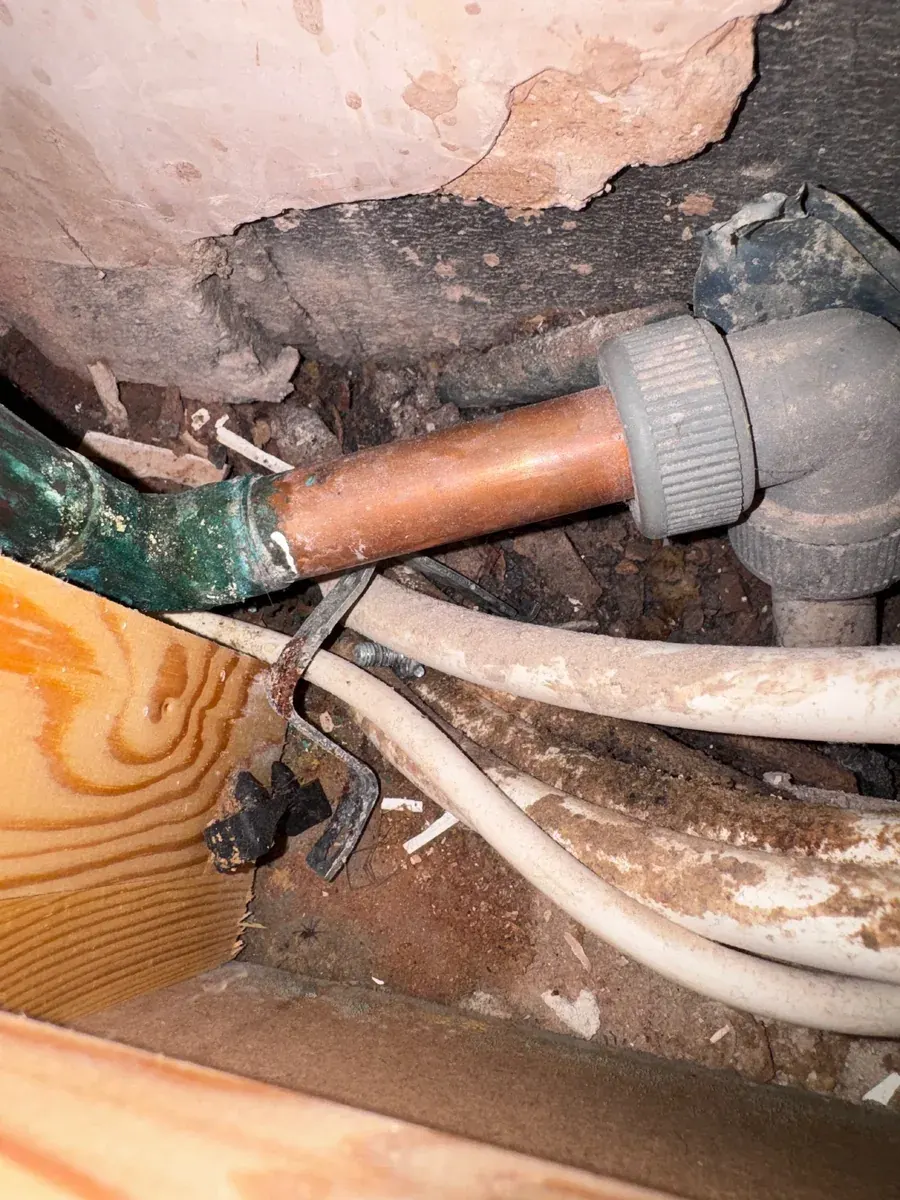
Finding a leak means narrowing down where water is escaping before anything is cut open, then repairing that point and proving it has stopped. The mark you can see is often some distance from the fault, because water runs along joists, pipes and screed before it shows.
What the job involves
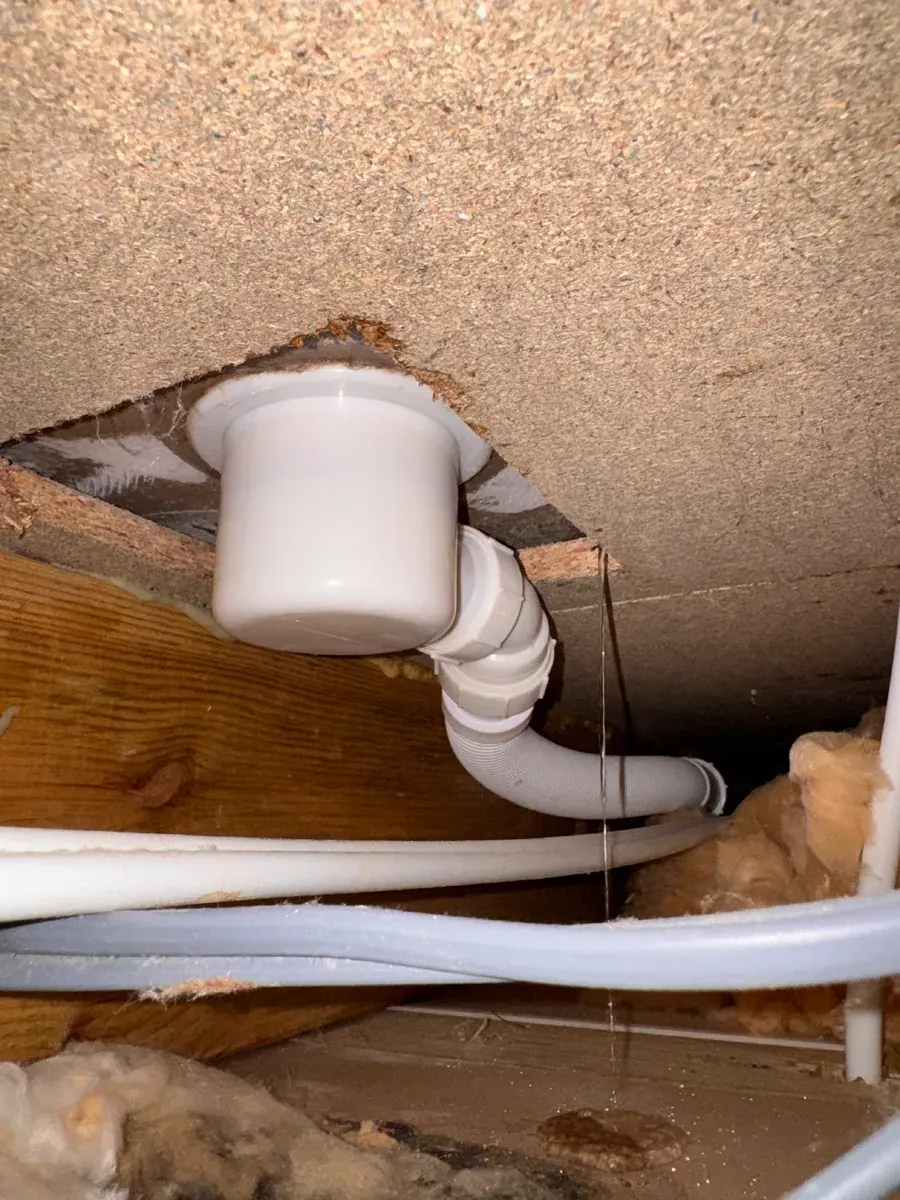
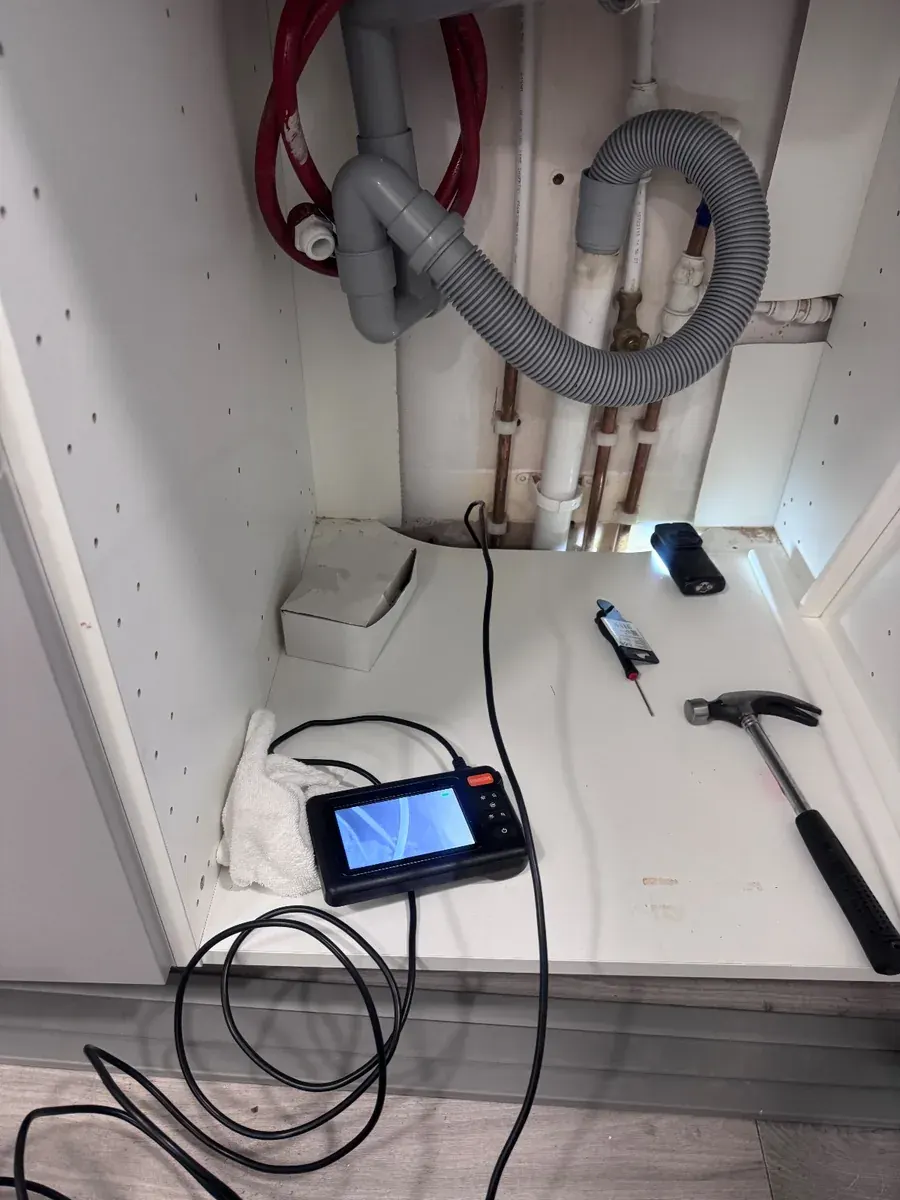
The search usually starts with the simplest explanations: sealant around a bath or shower, a waste joint that only drips when in use, an overflow, a toilet filling valve, a visible compression fitting. If those are dry, attention moves to concealed supply and heating pipes. Fixtures are run one at a time so that a wet area can be linked to one source. Where a pipe is hidden, an access opening may be needed. Ask what will be opened and who will close it afterwards.
Not every damp wall is a plumbing leak. Rain getting in, condensation and ground moisture can look similar, and a plumbing visit cannot put those right.
What we need from you
- Where the water or staining appears, and the room above it.
- When it started, and whether it grows after a bath, a flush, a wash cycle or with the heating on.
- Whether the boiler or system pressure gauge has been falling.
- Photos taken close up and from further back, dated if possible.
- Access details for the flat above or below, a managing agent or a landlord.
A meter check you can do
If your home has a water meter, close every tap, stop appliances and avoid flushing. Note the reading, including the small digits or dial, wait, and read it again. Movement suggests water is passing somewhere after the meter. Then close the internal stop valve and repeat: if the movement stops, the loss is likely to be beyond that valve, inside the property. A toilet that trickles into the pan will also move a meter, so check that first.
How the repair is checked
After the repair the pipe is brought back under water, the joint is wiped dry and inspected, and the fixture that triggered the fault is used again. Dry paper held under a joint shows weeping that a glance misses. A stain will not vanish straight away, so mark its edge in pencil and watch whether it spreads. Drying and redecoration are separate from stopping the water.
Safe first steps
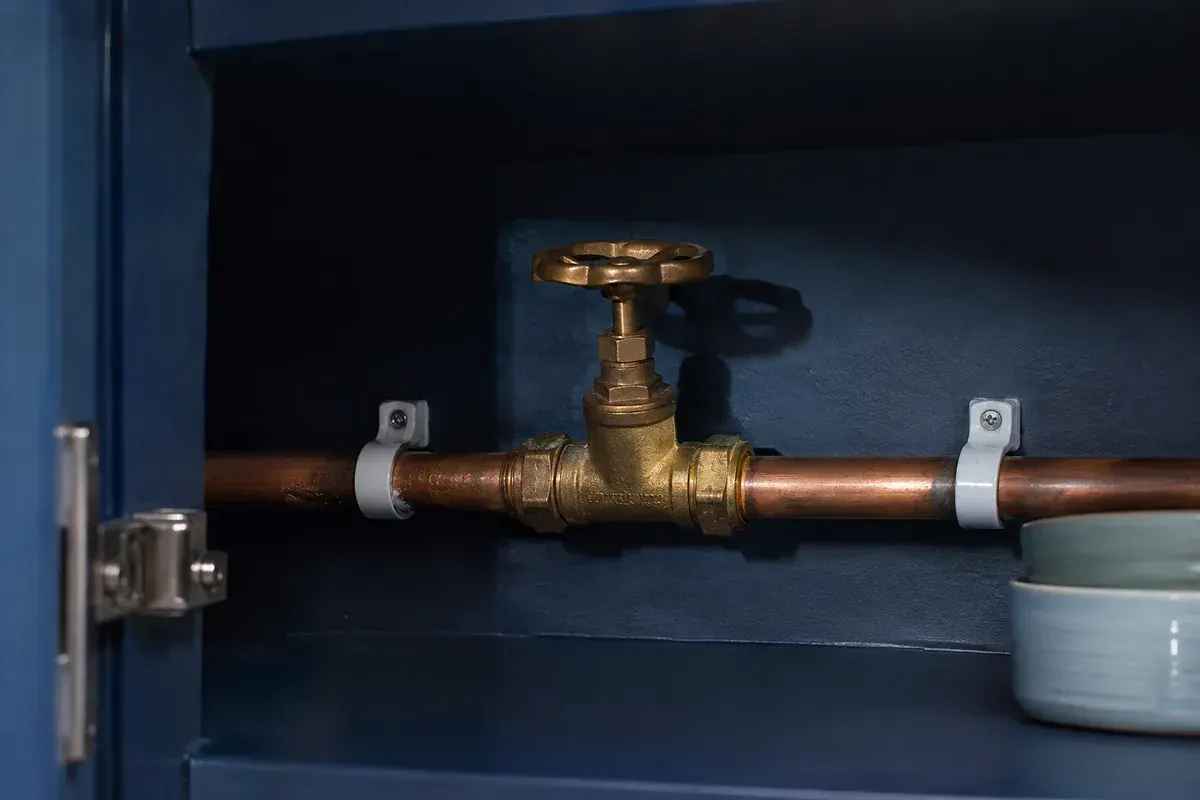
- Turn off the water at the stop valve, or at the valve feeding the suspected fixture.
- Keep clear of wet sockets, light fittings and a bulging ceiling. Switch off the affected circuit only if the consumer unit is dry and safe to reach.
- Catch drips, move belongings and tell any neighbour who may be affected.
- Photograph the damage before you clean up, and tell your insurer if it may be covered.
If water is pouring in or you cannot stop it, get someone who can attend straight away; do not wait for a reply to a web form. For anything slower, describe it in the contact form and include the notes above.
Before work is agreed
Ask what the visit is meant to establish: the location of the fault, the repair, or both. Ask what happens if the source is not found, and who is responsible for plaster, tiles and floor coverings.