Washing machine and dishwasher on the same waste pipe: twin spigot traps, standpipes, pipe size and fall, hose loops, backflow risks and how to test both.
Yes, two appliances can usually share one waste pipe, provided each hose has its own secured inlet, there is a working trap, and the pipe after it is large enough and falls correctly. What causes trouble is forcing two hoses into one connection or hanging both on a run that was only just coping with the sink.
Three common layouts
| Layout | How it works | Watch for |
|---|---|---|
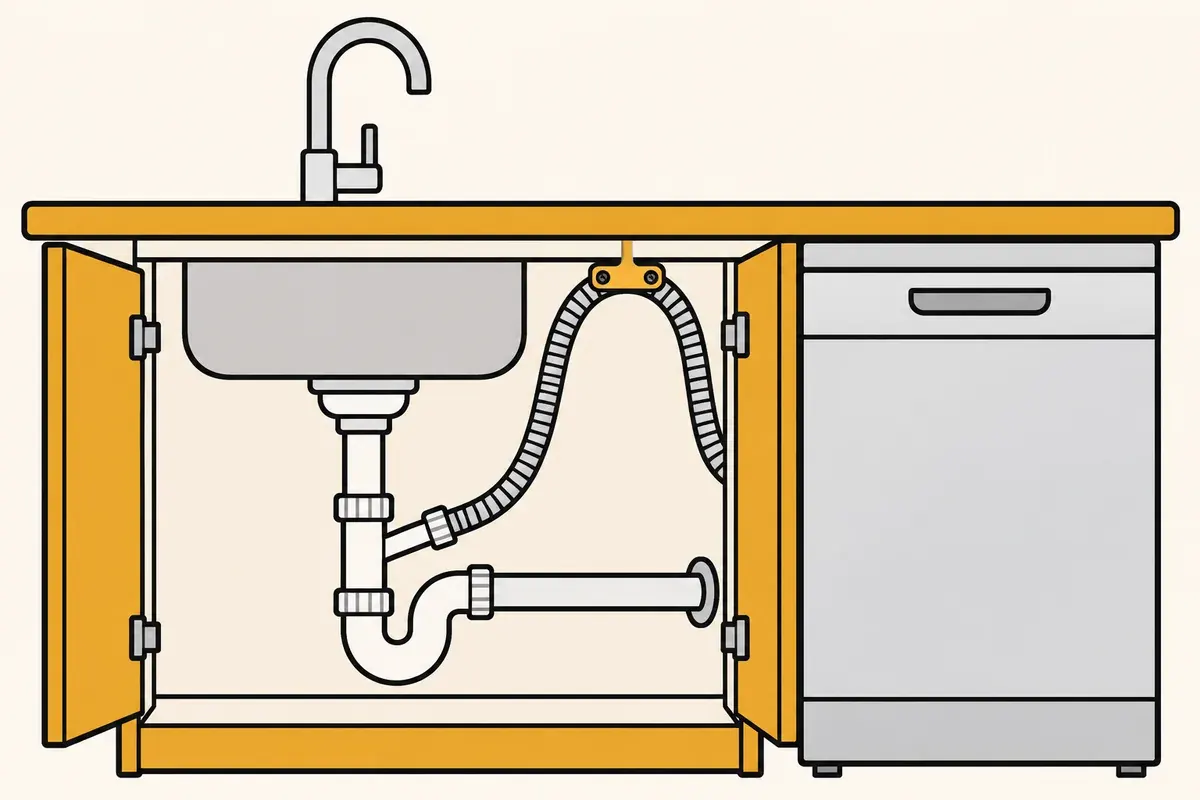
| Twin spigot sink trap | Both hoses clip onto inlets below the sink waste | Crowded cabinet, inlets set low |
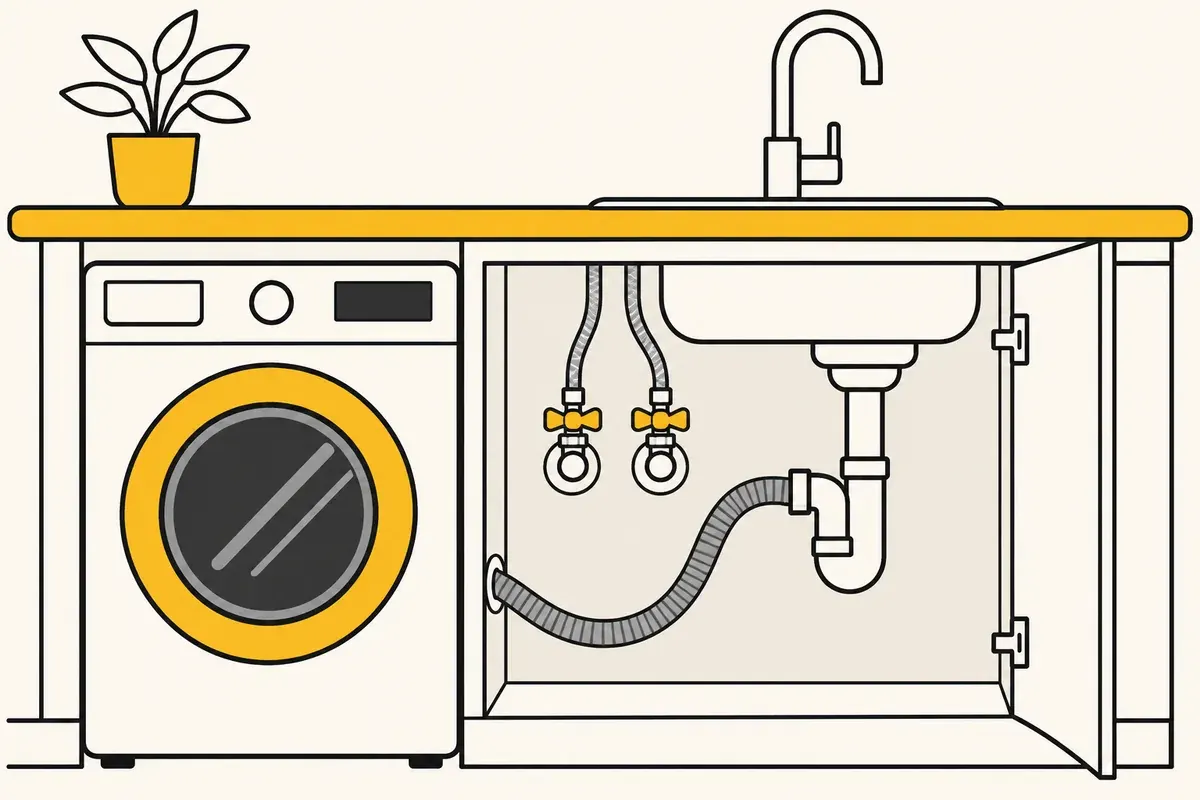
| Spigot plus standpipe | Dishwasher on the sink trap, washer into its own trapped pipe | Space and access for the second trap |
| Two standpipes on one branch | Each appliance has a trap before they join | Branch diameter, length and rodding access |
Manufacturers sell traps built for this job. One example is McAlpine's sink trap with twin appliance nozzles. A loose tee pushed into a single spigot is not equivalent: it restricts flow and often lets one machine pump into the other.
Size the shared pipe
Approved Document H gives a 40 mm minimum trap with a 75 mm seal for sinks, dishwashing machines and washing machines. It says a pipe serving one appliance should be at least the trap diameter, and that a pipe serving more than one appliance without ventilation should be at least the size shown in its tables for shared branches. The shared-branch table in that document does not list these appliances, so have the pipe size chosen for the actual length, fall and joining points, going up a size if the layout calls for it. The pipe should also have a way to clear a blockage.
A branch that is long, nearly flat or full of tight elbows will back up first when two pumps feed it. Ask for sweeping bends and note any section hidden behind units.
Keep dirty water out of the other machine
Pumped water takes the easiest route. If the common pipe is partly blocked, it can rise into a sink or run down the second hose.
- Take the dishwasher hose high under the worktop, or follow the height in its manual, before it drops to the inlet.
- Set the washing machine hose within its stated range. One Bosch washing machine manual gives 60 to 100 cm for standard and Aqua-Secure models, and warns that the hose end must not sit immersed in pumped water.
- Clip each hose so vibration cannot move it.
- Remove any blanking disc from a new inlet, and cap an unused inlet.
Supplies are a separate matter
Sharing a waste does not mean sharing a valve. Give each appliance an isolating valve that can be reached. Water fittings rules also expect backflow protection appropriate to the risk. Some appliances include suitable protection and some do not; Water Regs UK explains that compliance with the appliance standard alone is not enough for UK requirements, so check the product listing or add the device required.
Test properly
- With the cupboard empty, fill the sink and release it.
- Run the washing machine through a drain and spin while watching both inlets.
- Run the dishwasher drain.
- If household use will overlap, run both pump stages together.
- Look for water rising in the sink, hoses moving, gurgling and damp at joints.
- Check again the next day.
Foam appearing in the sink or standing water in the dishwasher points to a restriction or a poor hose route. Clean the trap before changing fittings.
Where does it end up?
Confirm that the branch reaches the foul drain. A pipe added through a wall to a rainwater gully is a misconnection, even if it appears to drain well.
When to book help
A new branch, a cut into a stack, a concealed run or repeated backing up deserves a plumber. If drains elsewhere in the home are slow too, that is a drainage fault and not an appliance fitting job. For a planned connection, email photographs of the sink cabinet, both hoses and the wall pipe, with the appliance model numbers; type the details into the contact form beforehand.
Questions people ask
Can both hoses go into one standpipe?
A single open standpipe is meant for one hose. Use a second standpipe or a fitting made for two connections.
Can both machines run at the same time?
Only if the trap and pipe beyond can carry both discharges. Test them together and watch for backing up.