Dishwasher waste connection explained: choosing the sink spigot, clearing the blanking plug, routing the hose high, and what to check on the first cycle.
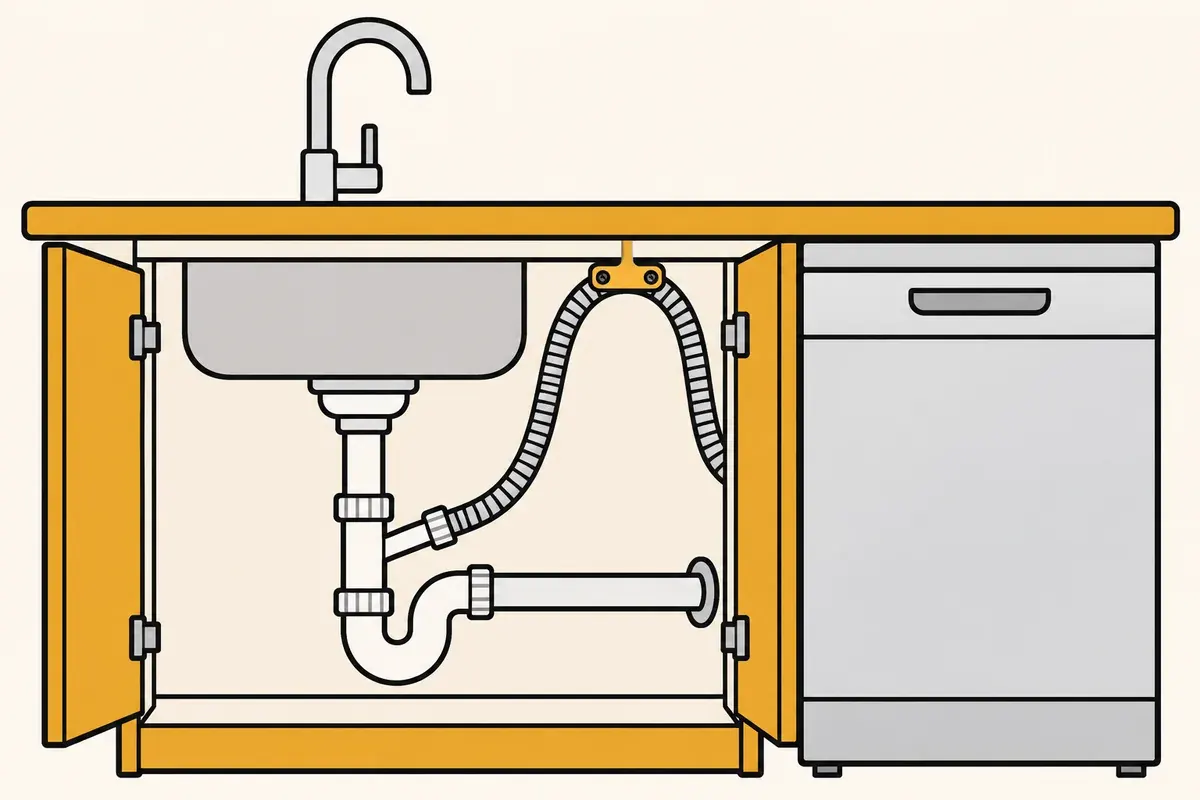
A dishwasher usually drains through its corrugated hose into a spigot on the kitchen sink trap or waste fitting. The hose is routed as high as the manual requires, clipped onto the spigot, and tested with a full drain while the cupboard is open.
What you need to know first
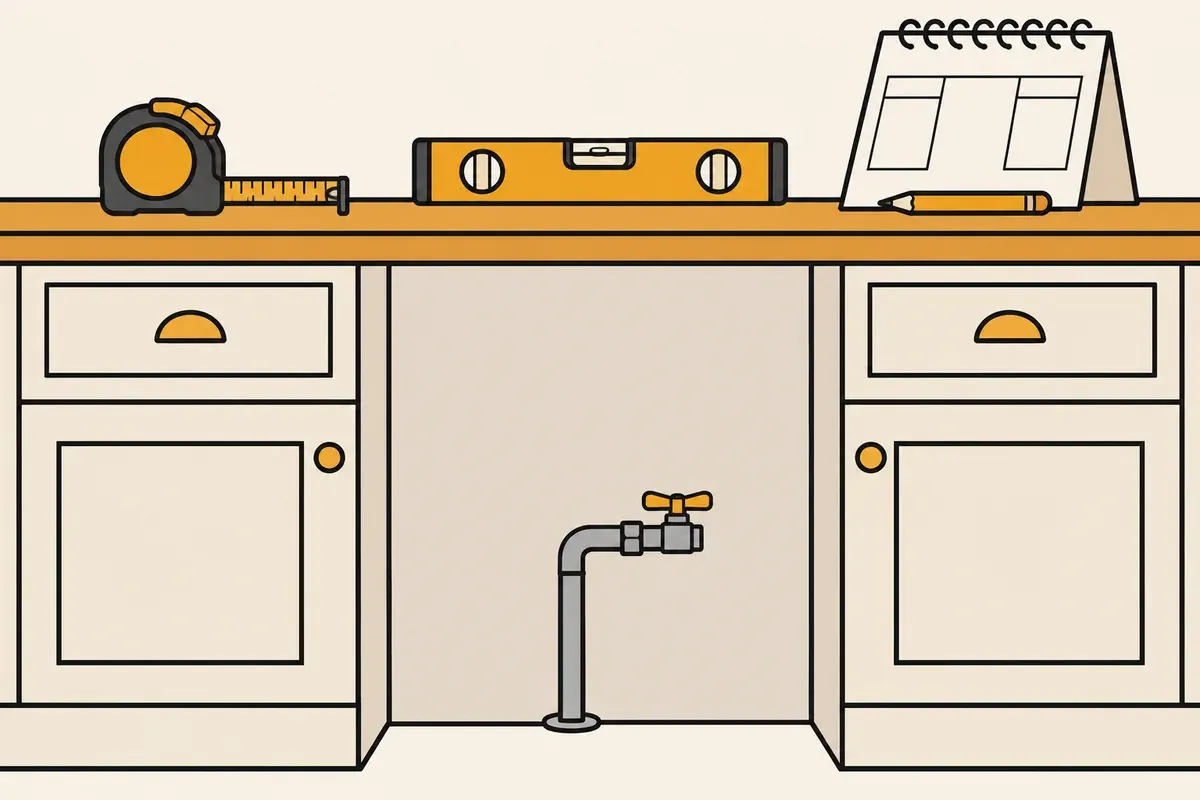
Find the installation sheet for your exact model. It sets the permitted outlet height, whether the hose may be lengthened and how the loop must be held. These figures vary, so a measurement copied from another kitchen is not reliable.
Then look in the sink cabinet:
- Is there a free spigot on the trap or on a fitting just above it?
- Will the hose reach it without being stretched or crushed by drawers and bins?
- Is there a hole through the cabinet side large enough for the hose end and elbow?
- Is the existing waste sound, with joints you can reach?
For sizing, Approved Document H gives a minimum 40 mm trap diameter and 75 mm seal for both sinks and dishwashing machines.
Choosing a trap with an appliance nozzle
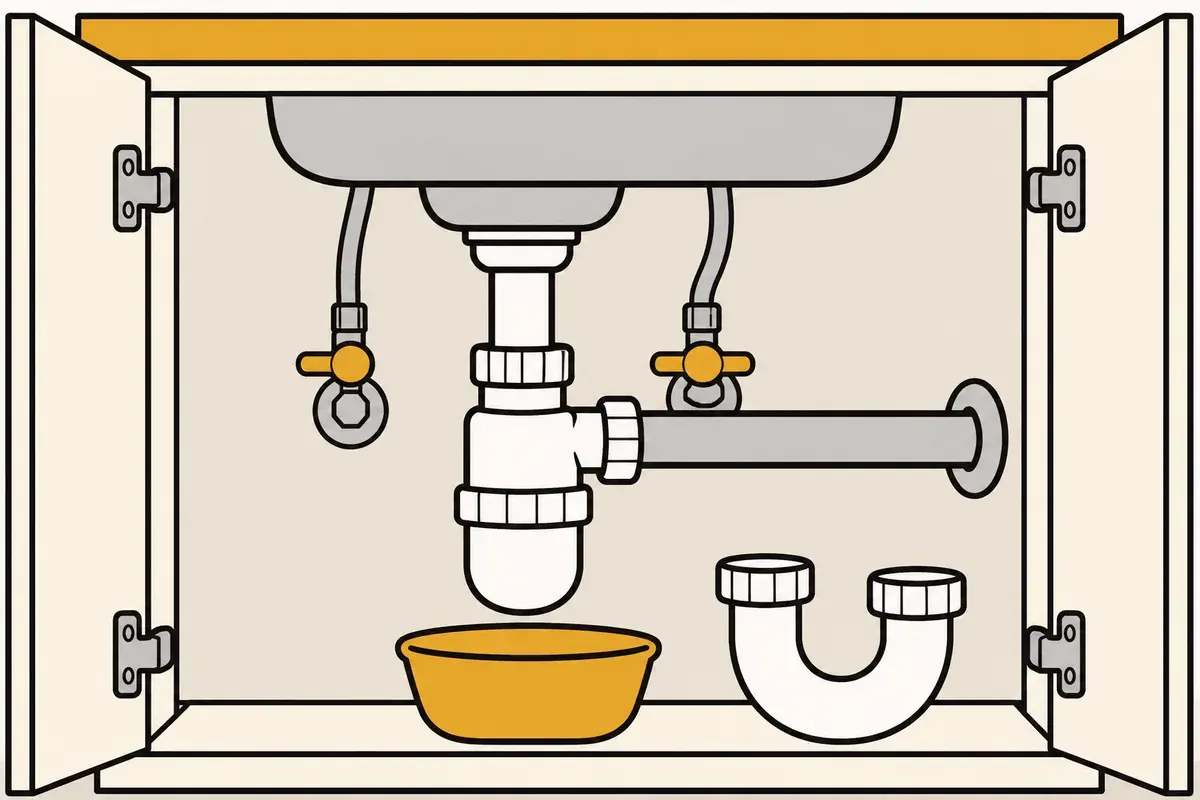
Use a trap with one nozzle for a dishwasher alone, or two if a washing machine shares it; a nozzle adaptor can keep an otherwise sound trap. McAlpine's twin nozzle sink trap is one example. Check the outlet height against the wall pipe, match the hose end to the nozzle, and cap any spare inlet.
Connecting the hose
- Isolate the appliance electrically and have a shallow tray ready.
- Take the cap off the spigot. Look inside for a moulded or inserted blank, and remove it fully following the part's instructions.
- If the sink has a disposal unit, the dishwasher inlet on that unit has its own knockout. InSinkErator's installation guide says to knock the plug out of the dishwasher inlet and remove the loose piece from inside the unit, and warns that the dishwasher may overflow if the plug is left in. The plug cannot be refitted.
- Feed the hose through the cabinet, keeping any grommet or smooth edge so it cannot chafe.
- Take the hose up to the underside of the worktop, or to the height the manual states, and fix it there before it drops to the spigot. This high loop makes it harder for sink water to run back towards the machine.
- Push the hose onto the spigot and tighten a clip over the overlap.
- Slide the dishwasher back slowly, watching that the hose does not fold behind it.
Common layout problems
Spigot too low or too crowded. A replacement trap with the inlet higher up, or a separate inlet fitting, may solve it. See sink trap replacement.
Machine far from the sink. A long extended hose collects residue and is hard to inspect. A new waste branch with a fall and its own trap is often the better design.
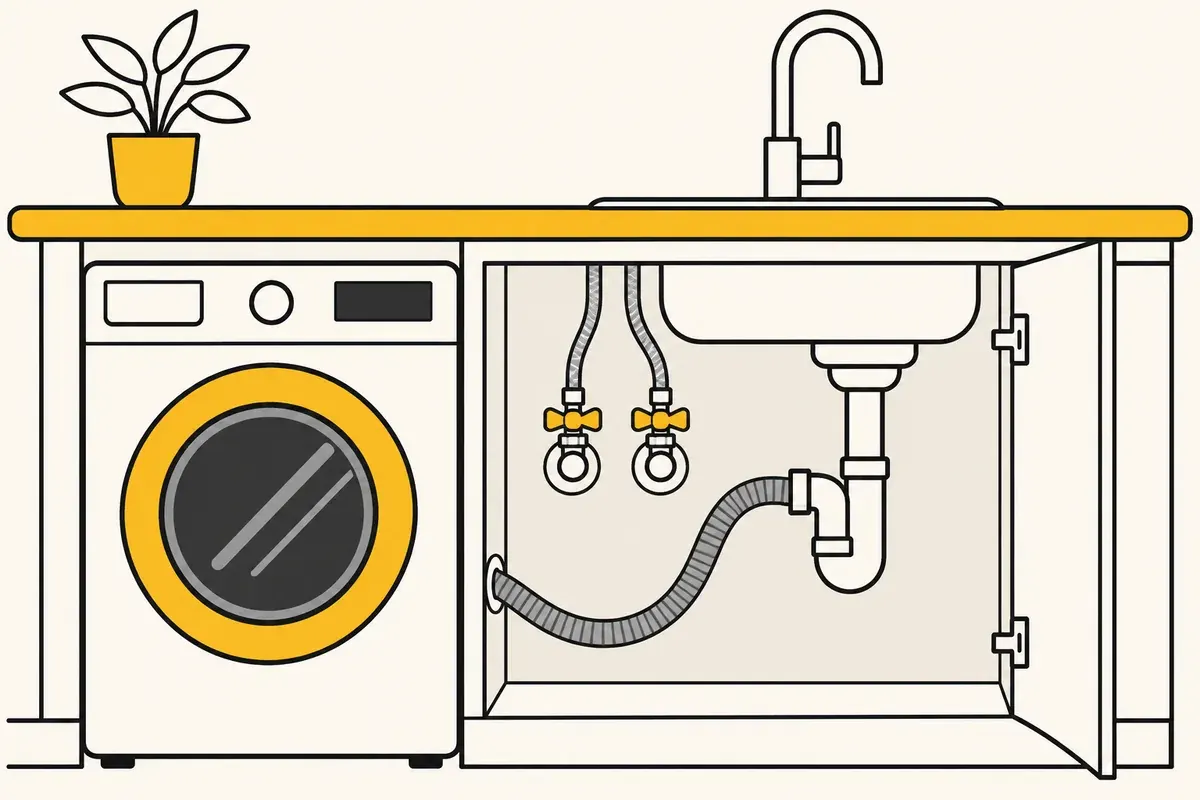
Two appliances. Do not force two hoses into one inlet with a loose tee. Use a fitting made for two connections and check that both hoses stay clipped when the cupboard is full.
First-cycle checks
Run the shortest programme that includes a drain. Watch the spigot and trap while it pumps, then fill the sink and release it, because the sink sends far more water past the joint than the appliance does. Look again the next day for drips on the cabinet base. Finally, check that dirty sink water has not appeared inside the dishwasher.
Where the water goes
Kitchen appliance waste belongs in the foul drain. If a pipe leaves the wall towards a rainwater gully, confirm what that gully connects to before using it; misconnected appliances pollute local waterways.
Doing it yourself, or not
This is a reasonable DIY task when a spigot is ready, the route is short and every joint stays visible. Get a plumber if the trap has to be rebuilt in a tight cabinet, a pipe must be cut or extended, or water has already damaged the units. This page covers the drain connection only: the supply hose, mains socket and fitting a door panel are separate steps.
Asking for the work
Send the model number through the contact form, then email a straight-on photo inside the sink cabinet and one of the appliance space, quoting your reference. Say whether the old dishwasher is still connected. No price is published, so ask what the visit would cover before booking.
Questions people ask
Why is a new dishwasher not emptying into the sink waste?
Check first for a blanking piece left inside a new trap spigot or disposal unit inlet, then for a kinked hose behind the machine.
Can a dishwasher and washing machine share one sink trap?
Twin-spigot fittings are sold for this. Each hose needs its own secured inlet, and the pipe beyond must cope with both.