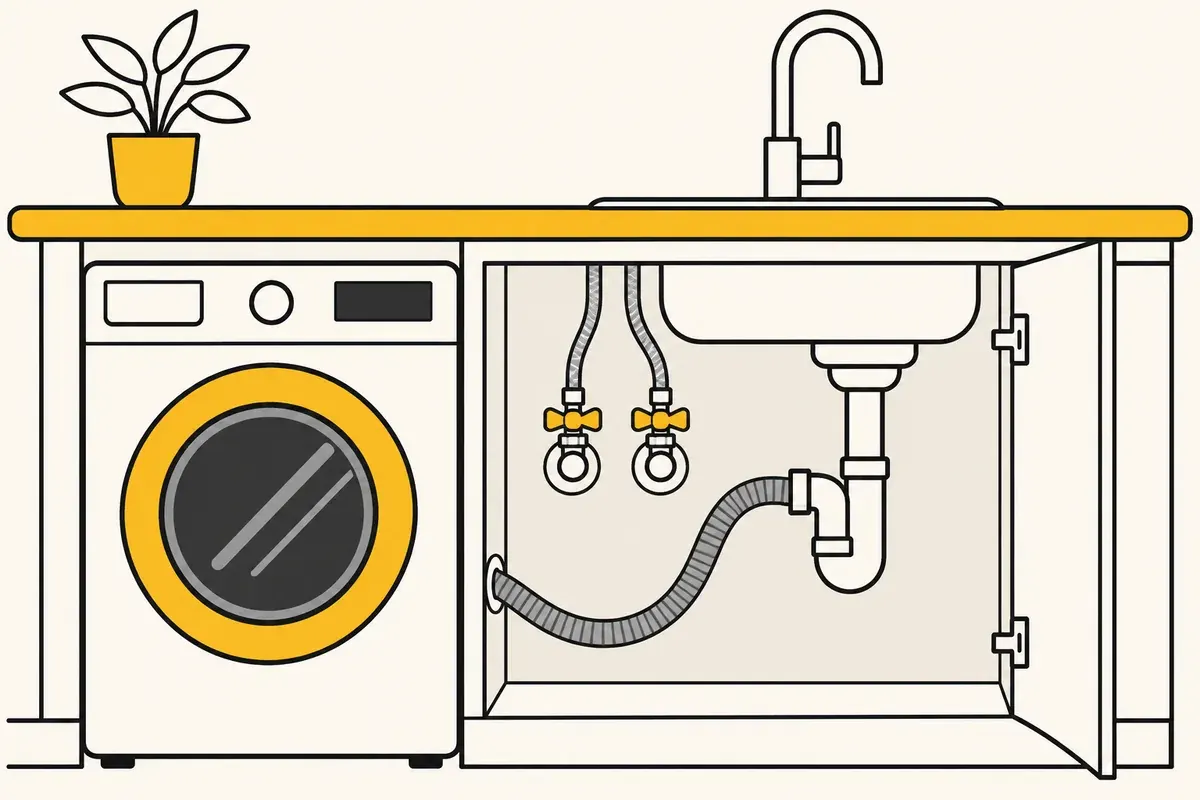
Washing machine in a bathroom: the electrical zone rules, who may add a circuit, backflow and valves, trapped waste, ventilation and floor loading checks.
A washing machine can only go in a bathroom if the electrical supply can be arranged safely under the wiring rules, in addition to normal water and waste connections. Speak to a registered electrician first, because that answer often decides the project.
Electricity decides it
Electrical Safety First states that sockets are not allowed in bathrooms or shower rooms, apart from shaver supply units, unless they can be at least 2.5 metres from the edge of a bath or shower tray. It also says circuits in or passing through these rooms need RCD protection, and advises against extension leads for appliances in a bathroom. A small bathroom may not have room to meet that distance.
Whether a fixed connection suits a particular machine and position is for the electrician to determine, including the zone it sits in and the manufacturer's conditions. In England, altering or adding to a circuit in a special location, such as the zones around a bath or shower, is work that needs notification to building control unless a suitably registered installer certifies it. Never plug a washer into a socket outside the door with the lead trailing through.
Water rules
The water fittings requirements apply as they would in a kitchen:
- backflow protection suited to the appliance;
- a servicing valve that can be reached;
- fittings protected from damage and kept watertight;
- cold water not unnecessarily warmed on its way.
Check whether the machine has backflow protection accepted for UK use or needs a separate device.
Waste
Give the machine its own trapped connection or a purpose-made appliance spigot on a basin trap that the trap maker permits. Approved Document H shows a 40 mm trap with a 75 mm seal for washing machines. A basin waste is often only 32 mm and may not cope with a pump discharging quickly, so do not tee a hose into it without checking. Soapy water must go to the foul system.
Damp, space and floor
A bathroom is humid, and manufacturers set conditions for where their appliances may stand. Read them before purchase. Ventilation guidance in Approved Document F covers extraction from bathrooms, and a washer adds to the reason to keep the fan working.
A loaded machine is heavy and vibrates when spinning. On a timber floor, have the support checked, particularly upstairs; the practical points are covered in washing machine upstairs installation. Keep the machine level, leave ventilation space and make sure shower spray cannot reach it.
Alternatives that are often simpler
- A hall or airing cupboard with its own door, if drainage and power can reach it.
- An under stairs space.
- A kitchen cabinet rearrangement.
- A utility corner in an extension.
Leasehold flats may restrict washing machines in certain rooms or require notice, partly because of leaks to the home below. Check the lease.
Planning the enquiry
Send the room dimensions, distance from the bath or shower to the proposed position, the nearest waste pipe and the appliance model. The contact form takes the written description; photographs follow by email with the reference. Electrical design and certification are separate from the plumbing quotation.
Rented homes and flats
A tenant should not add a machine, pipe or circuit without written permission. Landlords and managing agents will usually want to know how a leak would be contained and who certified the electrical work. Keep the certificates, the appliance manual and a note of valve positions together, so that a future occupier or a surveyor can see how the installation was done and where to shut it off.
Questions people ask
Is a washing machine banned from UK bathrooms?
There is no single plumbing ban. The difficulty is mainly electrical, because sockets are tightly restricted in rooms with a bath or shower.
Can I run an extension lead in from the landing?
No. Electrical Safety First advises against using extension leads to power appliances in a bathroom.