How to connect a washing machine waste pipe to a sink spigot or standpipe, with trap sizes, hose heights, anti-siphon points and leak checks.
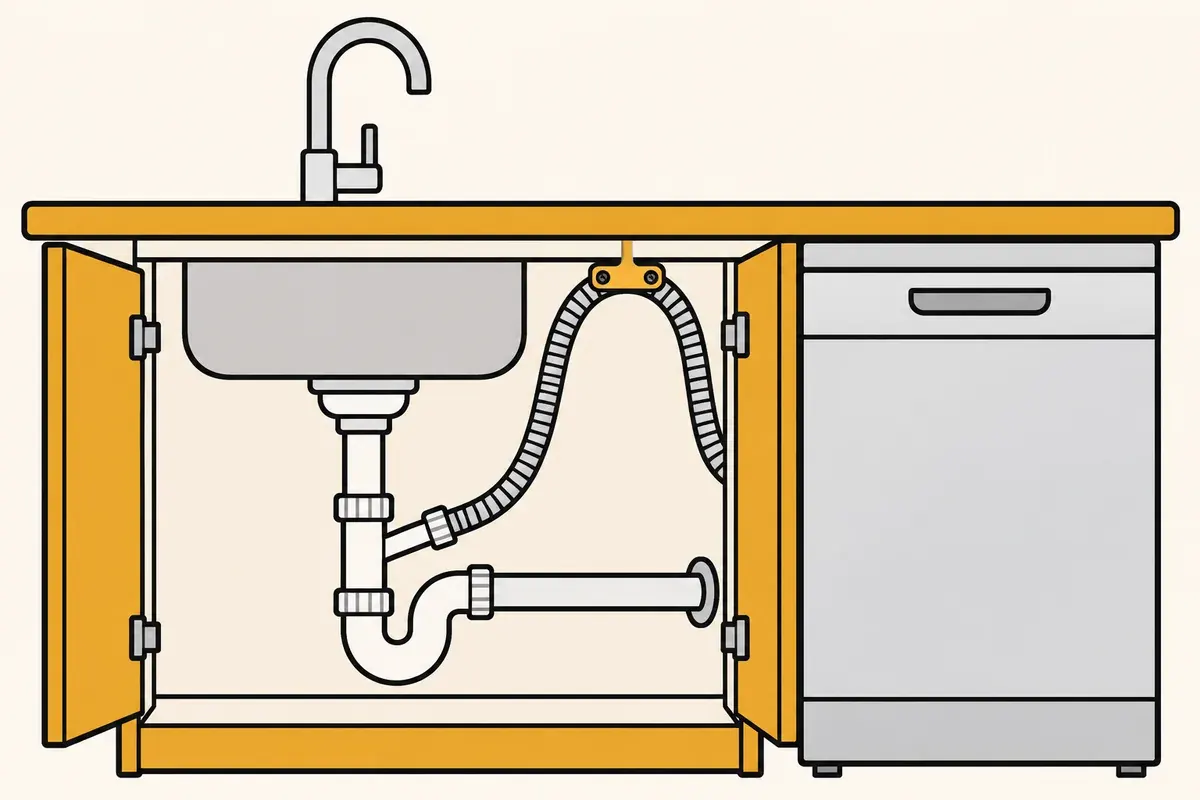
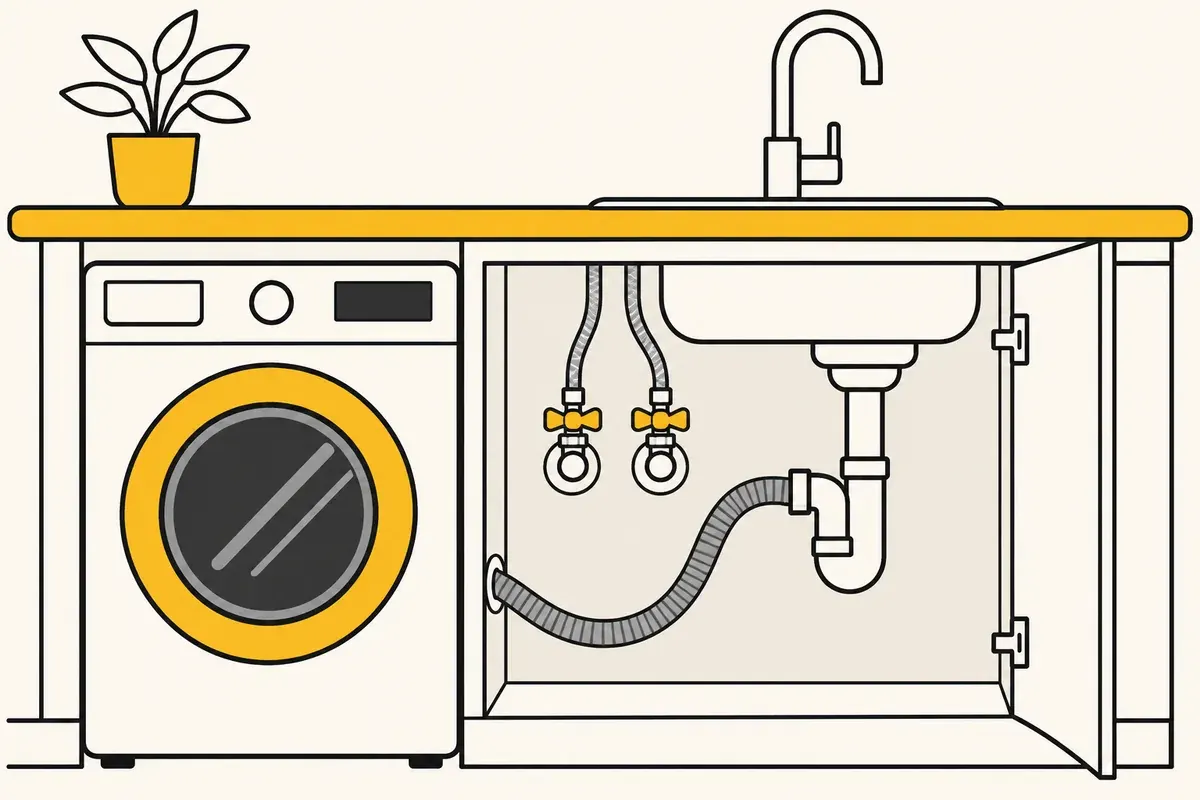
A washing machine drain hose normally connects in one of two ways: onto a spigot on the sink trap, or into an upright standpipe that has its own trap. Either way the water must reach the foul drainage system, the trap must keep a water seal, and the hose must be held so it cannot come loose.
Check what you already have
Look under the sink and behind the machine space.
| What you see | What it means |
|---|---|
| A capped side inlet on the sink trap or waste | A spigot connection may be possible |
| An open vertical pipe with a U-bend below | A standpipe, ready for a hooked hose end |
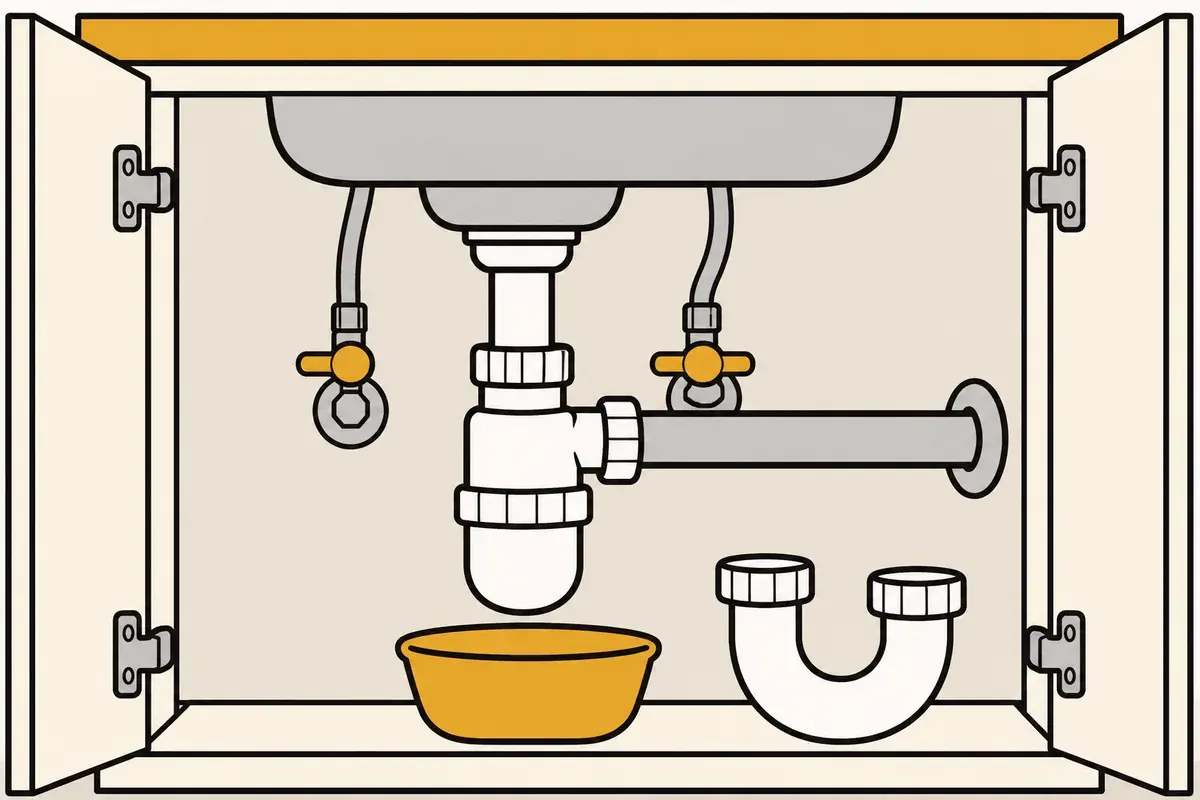
| Only a sink trap with no side inlet | The trap or a fitting needs changing |
| No waste pipe anywhere near | New pipework with a fall to the drain is needed |
Approved Document H lists a 40 mm minimum trap with a 75 mm water seal for a washing machine. The depth may be reduced to no less than 38 mm where the appliance discharges directly to a gully. The same document says traps should be removable or have a cleaning eye, so do not bury one behind a fixed panel.
Option 1: sink trap spigot
- Switch off the machine and put a bowl and cloths under the trap.
- Remove the cap from the spigot.
- Check for a thin blanking disc inside a new spigot or nozzle. If one is there, cut or knock it out as the fitting's instructions describe, and remove the loose piece.
- Push the hose fully on and fix it with a hose clip. A Bosch installation manual calls for a clamp of 24 to 40 mm on a trap connection.
- Route the hose up to the height the manual asks for, without kinks, and support it.
- Run water down the sink, then run a rinse and spin while watching every joint.
Option 2: washing machine standpipe
A standpipe is a vertical waste pipe, open at the top, with a washing machine waste trap at its base. The hose hooks into the top.
- Follow the manual on how the hose meets the pipe. Do not tape or seal over the joint unless the instructions provide a sealed connector.
- Hook the hose with the elbow bracket supplied, and do not push a long length down the pipe.
- The end of the hose must not sit under water. The Bosch manual warns that an immersed end risks waste being sucked back into the machine.
- Set the top of the pipe within the range your manual gives.
Hose height
Manufacturers differ, and models from one maker differ too. In the Bosch manual linked above, standard and Aqua-Secure models need an outlet 60 to 100 cm above the surface the machine stands on, while its Aqua-Stop model allows 0 to 100 cm. Treat those as one worked example and read your own booklet.
Drain hose extensions
An extension helps only when the existing hose cannot reach a correctly placed outlet. Check that the maker permits it and note any maximum length. Use a proper connector with clips, keep the joint where you can see it, and never run an unsupported loop along the floor. Often it is better to move the waste connection closer to the machine.
The right drain
Check where the pipe goes, particularly for a machine moved into a garage, shed or extension. A pipe discharging to a rainwater gully or downpipe may feed a surface water sewer. Thames Water says appliances plumbed into surface water drains are misconnections, and the property owner is responsible for private connections.
Signs the connection is wrong
- Water backs up into the sink during pumping: look for a restriction in the trap or waste, or a plug in the way.
- The machine fills and empties at once: check the hose height and whether the end of the hose is sitting in water.
- Gurgling or smells afterwards: the trap seal may be getting pulled out by a long or shallow waste run.
- Drips from the spigot: check the clip and that the hose size matches.
When to get someone in
Do it yourself when a suitable spigot or standpipe is already there and you can see the whole route. Ask for help if you need to cut into a waste or stack, add a new run through a wall, or cannot tell where the pipe discharges. Electrical faults and faults inside the machine are outside a plumbing connection.
If you want the job done, send the details, then email photos of the sink underside, the space behind the machine and the end of the hose, quoting your reference. Ask for the price and what it includes before agreeing. If the water supply side also needs work, see washing machine valve replacement.
Questions people ask
How high should a washing machine drain hose be?
Use the figure in your model's manual. One Bosch manual gives 60 to 100 cm above the surface the machine stands on for its standard and Aqua-Secure models.
Can the hose just sit in the sink?
Some manuals allow it if the hose is secured and the plug cannot block the sink. It is a poor permanent arrangement because the hose can fall out.
Can I extend a washing machine drain hose?
Only as the manufacturer allows. A longer or higher run makes the pump work harder, and every added joint is a place to leak.