Waste disposal unit installation checks before buying: sink opening size, cupboard space, trap choice, dishwasher inlet, electrical supply and testing.
Installing a waste disposal unit involves mounting it under the sink outlet, connecting its discharge to a trap and the waste pipe, adding the dishwasher hose if used, and testing it on a suitable power supply. Check the sink and electrics before buying.
Check these first
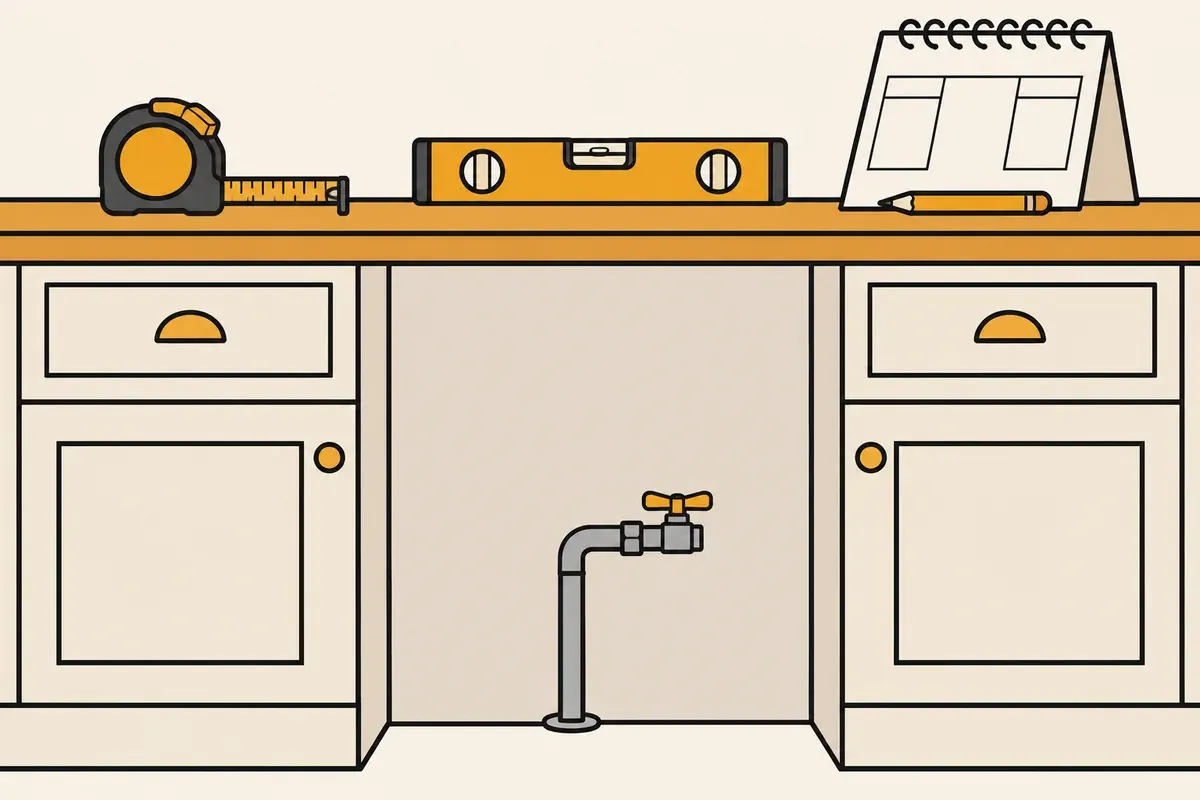
Sink opening. Many units need a large outlet. InSinkErator's UK checklist asks for a 90 mm sink hole, and an extended flange where the sink is more than 19 mm thick. A smaller outlet needs a different sink or an alteration approved for that material.
Depth. The motor hangs below the bowl. Compare its height and outlet position with the pipe leaving the cupboard. InSinkErator's installation guide says the waste pipe entering the wall must be lower than the unit's discharge outlet, so that water does not stand in it.
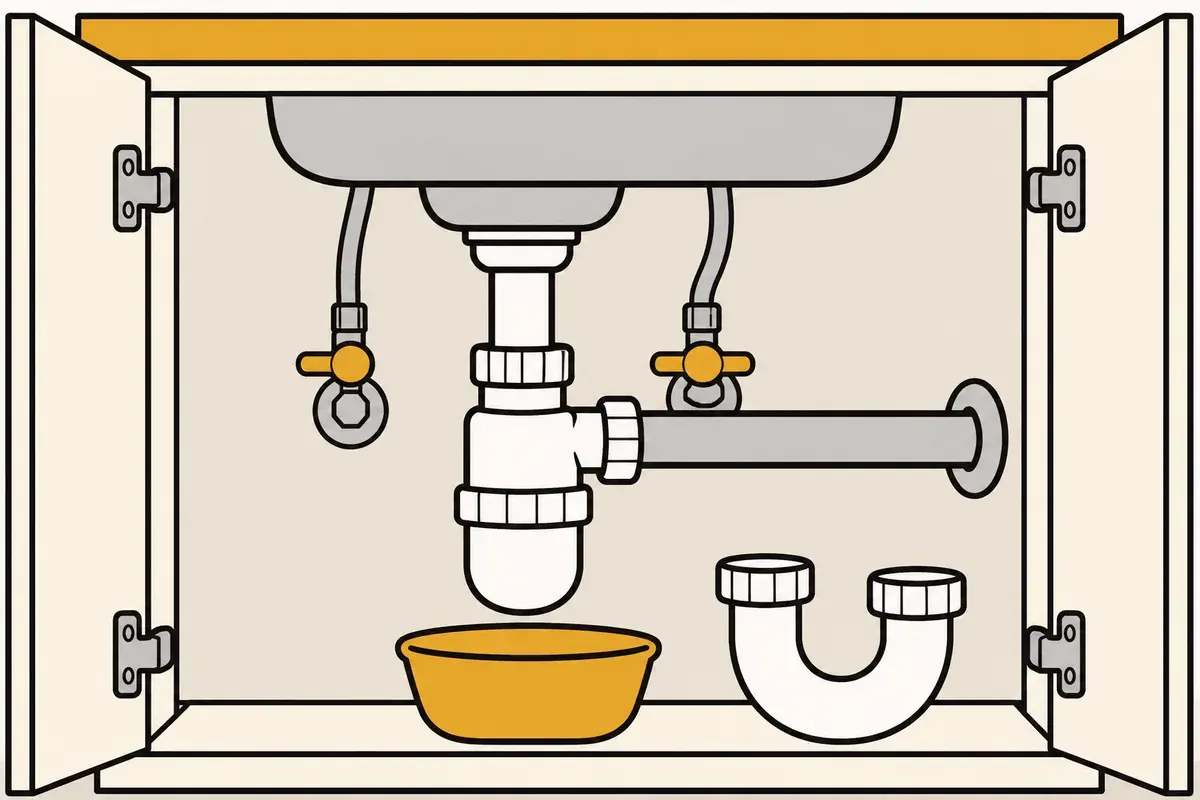
Trap. Use the trap type the unit's instructions show; the InSinkErator guide calls for separate drain traps on a double sink. Approved Document H lists a 40 mm trap with a 75 mm seal for a food waste disposal unit.
Power. The InSinkErator guide calls for an earthed 13 amp socket and says the motor reset button must stay readily accessible. Its UK checklist wants that socket accessible and within 600 mm of the installation area. Other makes may differ. In England, a new circuit is notifiable building work. Wiring is not part of the plumbing job described here.
What the plumbing job covers
- removing the existing sink outlet and trap;
- fitting the flange, gaskets and mounting ring in the maker's order;
- hanging and aligning the unit;
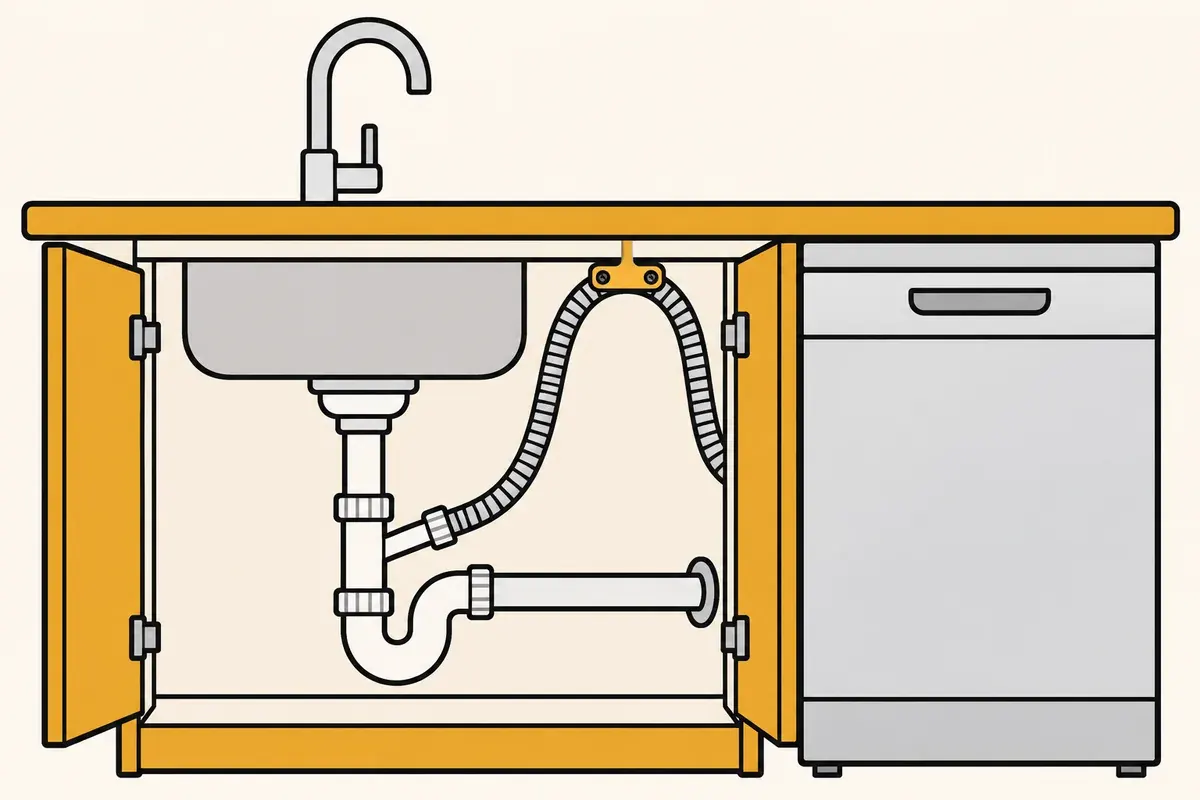
- connecting the discharge elbow, trap and waste;
- opening the dishwasher inlet only if a hose will use it;
- checking for leaks with water running.
Sink cutting, new cabinets, switches, sockets and removal of drain blockages are separate. Confirm price and scope before work.
Dishwasher connection
A new unit may have a blank across its dishwasher inlet. It must be removed when connecting an appliance, and left in place when nothing is attached. Secure the hose with a clamp and test with a drain cycle.
Testing
Fit any splash guard and stopper as supplied. Run cold water, switch on the empty unit and watch the flange, elbow and trap. Never put a hand into the chamber. The InSinkErator guide says to run cold water while grinding, then for at least 15 seconds afterwards to flush the drain line.
What goes down it
Follow the maker's list of excluded items. A disposal unit is not a way to dispose of grease. Thames Water asks households to keep fats and oils out of sinks and to catch scraps with a strainer, because the build-up causes blockages. Consider whether a food waste caddy would do the job you want, and check your lease or building rules before fitting a unit in a flat.
Replacing an existing unit
Send its model label. A matching mount can make removal easier, but gaskets, outlet height and trap parts still need checking. If the old unit has stopped, try the reset procedure in its manual before deciding to replace it, with the power off for any inspection the manual describes.
Enquiry details
Describe the job in the contact form, then email photos of the sink from above and below, the wall pipe and any socket, quoting your reference. Add the unit model if bought. Say whether a dishwasher shares the waste. The measuring sheet shows where to measure outlet and cupboard space.
Questions people ask
Will a disposal unit fit any sink?
No. Check the outlet opening, the sink material and thickness, and the clearance underneath against the unit's manual.
Does it need a new socket?
It needs a suitable, accessible electrical supply. If there is none, arrange an electrician before the plumbing visit.