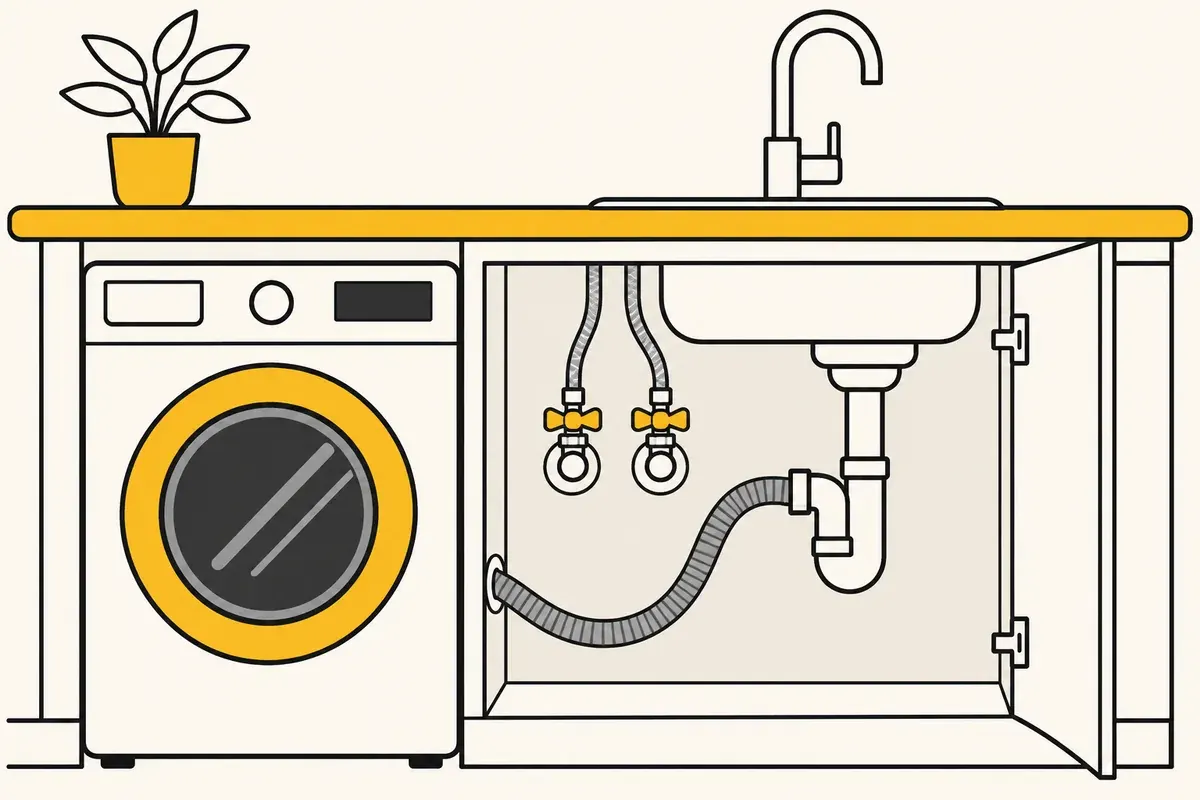
How to fit an integrated washing machine: check the housing space, remove transit bolts, route hoses and cable, level the machine and hang the furniture door.
Fitting an integrated washing machine means doing four things in order: confirm the cabinet space against the manufacturer's drawing, take out the transit bolts, connect and level the machine, then fit the furniture door. Do the door last, because every adjustment to the machine moves it.
Measure the housing first
An integrated model is designed to sit under a worktop with a kitchen door fixed to its front. Download the installation drawing for your exact model before anything is cut or ordered, and compare:
- the clear width and height of the opening, measured at the front and the back;
- the depth left once pipes, the trap and the plug are allowed for;
- the plinth height and any notch it needs in front of the filter flap;
- the weight and thickness limits for the furniture door;
- which side the door can be hinged.
Services usually pass into the next cupboard so the machine can sit fully back. If the old appliance was freestanding, the hoses may currently come out exactly where the new one needs to go.
Prepare the machine
Transit bolts hold the drum still during delivery. Beko's installation guide says up to five may be fitted at the back of its machines, that they must be removed before installation, and that plastic caps go in the holes. Check your own booklet for the number, and keep the bolts for a future move.
Stand the machine on a firm floor. A thin or springy surface transmits spin vibration into the cabinets, so deal with the floor before the appliance goes in.
Connect water, waste and power
- Run the inlet hose to the washing machine valve without crossing sharp cabinet edges. Check the rubber seals are in both ends. The fill hose guide covers thread sizes and longer replacements.
- Take the drain hose to a sink trap spigot or standpipe at the height your manual gives. See washing machine waste connection.
- Take the cable to a socket that can be reached after the machine is installed, usually in the adjoining cupboard. A new socket or circuit is electrical work for an electrician.
Leave enough slack to draw the machine forward, but arrange it so loops cannot fall behind the drum or be crushed when you push back.
Test before enclosing anything. Open the valve, look at both hose ends, run a short rinse and spin, and watch the waste connection while it pumps.
Slide in and level
Feed hoses and cable through as you push, with someone in the next cupboard taking up the slack. A sheet of hardboard can protect the finished floor on the way in. Adjust the feet until a spirit level reads true side to side and front to back, then tighten the lock nuts if your model has them. All four feet should carry weight. Press on opposite corners to check for rocking.
Set the height so the machine clears the underside of the worktop by the margin in the drawing. Fit any fixing brackets or damp barrier strip supplied.
Hang the furniture door
Most models come with hinges, a template and a magnet or catch.
- Lay the furniture door face down on a soft cloth.
- Position the template as instructed and mark hinge and screw positions.
- Drill only to the depth the screws need, using a depth stop so you do not break through the face.
- Fix hinges and catch plate, then hang the door on the machine front.
- Adjust until gaps match the neighbouring doors and the detergent drawer area clears.
Fit the plinth last, leaving the filter reachable.
Final test
Run a full cycle with the door and plinth still off if practical, so a drip is visible. Listen during spin for knocking against a cabinet side. Look under the machine with a torch afterwards.
Where to stop
Ask for help if the cabinet needs rebuilding, the pipes must be moved through a wall, or the valve will not shut. Cabinet alterations may need a kitchen fitter. If you want the water and waste connected for you, put the model number in the contact form and email photos of the empty housing quoting your reference.
Questions people ask
Can a freestanding washing machine go behind a door?
Only if its maker provides for it. A freestanding machine has no door fixings and needs different clearances, so check its manual.