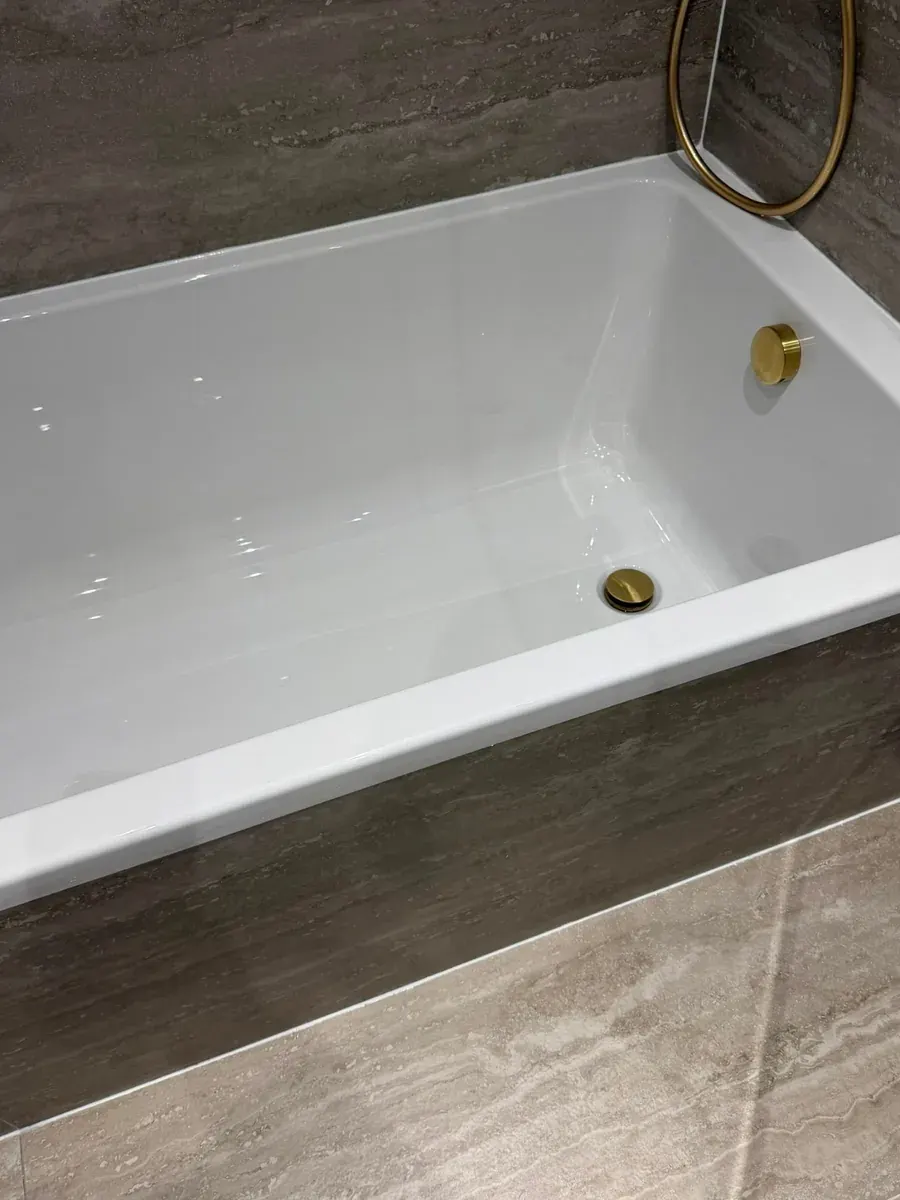
Bathroom sanitaryware swap like for like: match toilet, basin and bath to existing pipes, check valves, wastes and floors, and avoid hidden extra work.
Swapping a suite without moving pipes is realistic when the new toilet, basin and bath match the existing soil outlet, supply positions, wastes and footprint closely. Measure the old fittings first and buy to fit them.
Match each item
| Item | Dimensions to match |
|---|---|
| Toilet | Outlet type and height, projection, cistern inlet side |
| Basin | Waste position, pipe centres, fixing holes, tap holes |
| Bath | Length, width, waste and overflow end, rim height |
| Taps | Hole size, centres, pressure rating |
| Shower tray | Size, waste position, upstands |
Small differences matter. A new basin on a pedestal may stand a few centimetres lower than the old one, leaving pipes that do not meet. A narrower bath leaves a gap in tiling.
Hidden extras
- Floor: a new toilet footprint may expose unfinished floor.
- Tiles: sealant lines and old bath edges can need retiling.
- Valves: old stop valves may not close; new servicing valves are worth fitting.
- Pipe sizes: imperial pipe may need adapters.
- Wastes: rigid old traps rarely fit new outlets without change.
- Cistern: the fittings regulations limit a new flushing device to a 6 litre single flush, with a smaller dual flush no more than two thirds of the larger. A cistern installed before 1 July 1999 may be replaced by one delivering a similar volume, but a single flush one may not then become dual flush. Check the pan is designed to clear with the cistern you choose.
- Damage: rot under a leaking joint.
When the water company must be told
Most like for like swaps need no application, but the notification table for England and Wales includes installing a bath holding more than 230 litres to the centre line of the overflow, a bidet with an upward spray or flexible hose, and some showers and pumps. Check the new product sheet for capacity and type, and give notice before work where it applies. The regulations also require a servicing valve beside each toilet cistern inlet.
Check old materials
Older panels, floor tiles and soil pipes can contain asbestos. See the HSE asbestos guidance and arrange checks before breaking anything suspect.
Measure and photograph
Remove the bath panel if you safely can. Photograph waste, supplies, valves and soil joint with a tape. Note water supply type and whether other taps in the house run well.
Planning the order
- Check every new item is complete and undamaged.
- Confirm that the water can be isolated.
- Remove one fitting at a time where possible.
- Cap supplies and plug wastes.
- Prepare floor and walls.
- Fit toilet early so the home has a WC.
- Fit basin, bath and shower, testing each.
- Seal, cure and recheck.
What not to assume
Same nominal size does not mean same drawing. Wall-hung or back-to-wall replacements are not like for like if the old toilet was close coupled. A bath to shower change is a layout change, covered separately in bath to shower conversion.
Tenants and flats
Get written permission, and tell neighbours about water shut-offs in shared systems.
Quote information
List old and new models, include the drawings and say what finish work is expected. Use the contact form, then email the photos with your reference. Ask for removal, disposal, tiling and sealing to be shown as separate items.
After the swap
Check every joint after a day and again after a week. Keep manuals and part numbers. If anything rocks or weeps, stop using it until fixed.
Keeping the old suite until the new one arrives
Do not strip the room on the strength of a delivery date. Open each box when it arrives, check for cracks and missing fixings, and lay the parts beside their drawings. A single wrong tap spacing or absent waste can leave the home without a basin for days. Where there is only one toilet, agree that it is removed and replaced within the same visit, and have a fallback if the new pan will not connect. Take photographs of pipe positions before and after, which help if a part later needs replacing.
When a swap becomes a refit
If more than one drain, supply or wall must move, price the work as a new layout with its own checks on falls, floor and approvals.
Questions people ask
Is a like for like swap always simple?
No. Old pipe sizes, floor marks and seized valves often add work.
In what order are items replaced?
Usually so that the home keeps a working toilet for as long as possible.