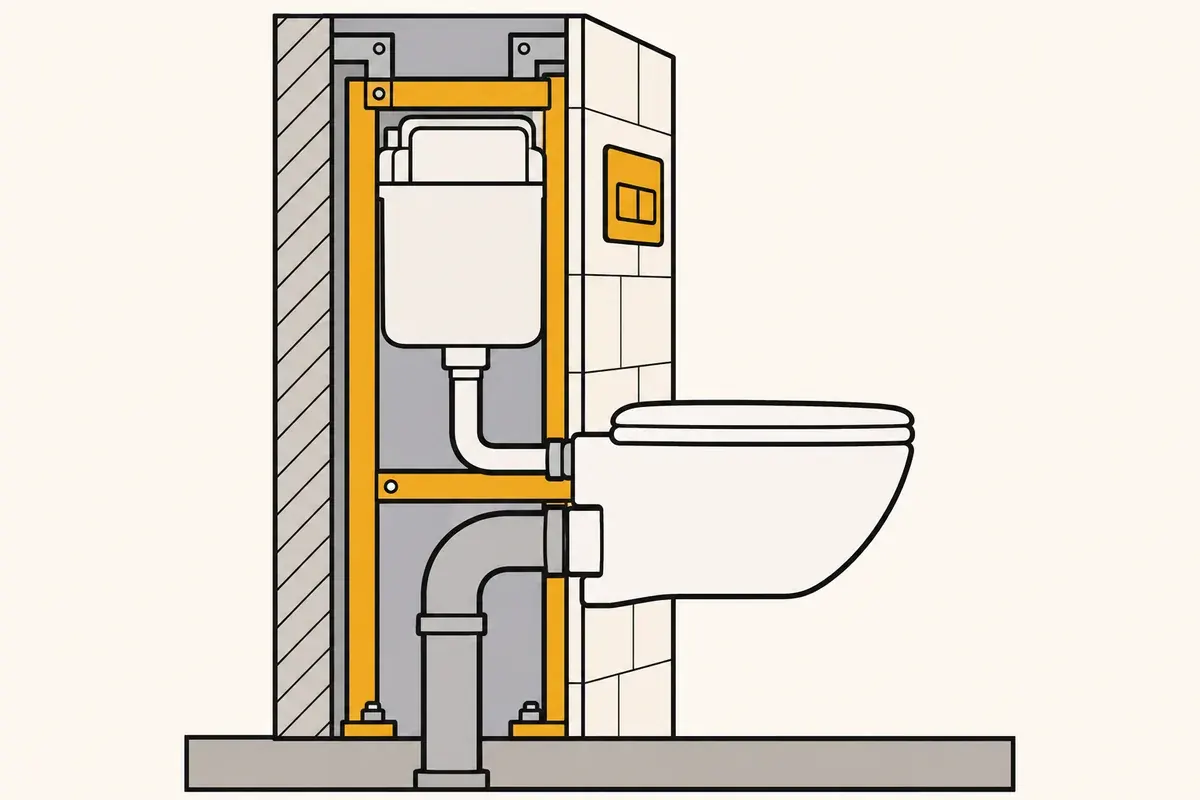
Loose toilet how to secure: find what is moving, check floor and screws, shim gaps, tighten gently, protect the soil seal and test for leaks after the fix.
A rocking toilet needs the movement found and the gap supported before anything is tightened. Check the floor screws, the base, the cistern joint and the floor itself. Then protect the waste connection, which repeated movement can disturb.
Locate the movement
Hold the bowl and rock gently, then hold the cistern.
| What moves | Likely cause |
|---|---|
| Whole pan on floor | Loose or corroded screws, uneven base |
| Floor around it | Soft boards, rot or loose tiles |
| Cistern only | Wall screws or coupling bolts |
| Seat only | Hinge fixings, see seat guides |
Damp boards, stains below or a smell suggest that water has already escaped. Fix the source before securing anything over it.
Safety first
Do not force a ceramic pan. A cracked base or bowl can leave sharp edges and fail suddenly; it needs replacing. Turn off the cistern supply if the movement is strong or the pipe is being pulled.
Re-securing on a sound floor
- Remove screw caps and try the screws gently.
- If one spins, take it out and inspect it and its hole.
- Look for a gap under the pan with a thin card.
- Insert plastic toilet shims into low points until rocking stops, without lifting the pan off its seal.
- Fit corrosion resistant screws with plastic or rubber washers, replacing plugs as the floor requires.
- Tighten each a little in turn and stop when firm.
- Trim shims and refit caps.
Never put a drill into a floor without checking for pipes and cables. Heated floors need the layout plan. New holes in tiles need the correct bit and care near the edges.
Sealant
A narrow bead around the base keeps cleaning water out. Many installers leave a small gap at the back so a leak can show. Sealant is not a substitute for screws or shims, and filling under the pan with cement makes future removal very difficult.
Floor problems
If boards flex or crumble around the soil pipe, the toilet has to come up while the floor is repaired. That includes disconnecting water and waste; see removing a toilet. Rotten timber suggests a long-term leak that should be traced.
Check the waste joint
After securing, flush several times and look behind the pan with a torch. Dry tissue under the connector reveals small leaks. A connector that has been stretched or twisted should be replaced and the cause corrected; see soil connections. The flush pipe or coupling seal and the supply pipe also deserve a look.
Cistern fixings
A cistern that rocks stresses the coupling seal. Tighten wall screws with their spacing pads, and coupling bolts evenly and lightly. Replace perished washers as a set.
Getting help
Give the toilet type, floor material and what moves on the contact form. Email photos of the base, the back of the pan and any damp, quoting the reference. In a flat, tell the managing agent about leaks affecting the floor below.
Preventing a repeat
Movement usually returns when the cause was only partly dealt with. Check that shims remain in place after a few weeks of use, that screws have not started to spin and that nobody is leaning back heavily against an unsupported cistern. If flooring is being replaced, fit the new surface so the pan sits on a flat, solid area, with screw positions recorded. A pan balanced half on new tiles and half on old boards will rock again.
When replacement makes more sense
A cracked foot, broken fixing holes or an old pan that will not sit flat on a levelled floor may justify a new toilet. Measure the outlet and projection first, so that the replacement connects to the existing drain without strain.
Questions people ask
Can I just tighten the floor screws harder?
No. Overtightening against a gap can crack the pan. Fill the gap first.
Should I stop using a rocking toilet?
If there is water at the base or smell, stop and get it checked. Movement can break the waste seal.