How to remove a toilet safely: isolate and drain the water, separate the cistern, free the pan from the floor and soil pipe, then seal both openings.
To remove a close-coupled toilet, shut off its water, flush and soak up what remains, disconnect the supply, unfix the cistern and pan, ease the pan off the soil connection, then seal the pipe ends. Plan where the water will stay off before you start.
Before touching it
- Find the isolating valve on the supply, or the main stop tap, and prove it works.
- Check whether this is the only toilet and how long it will be out.
- Gather towels, a bucket, sponge, gloves, spanners, a screwdriver, a knife and safety glasses.
- Have a cap for the water pipe and a plug for the soil pipe ready.
- Look for cracks. Broken ceramic has very sharp edges.
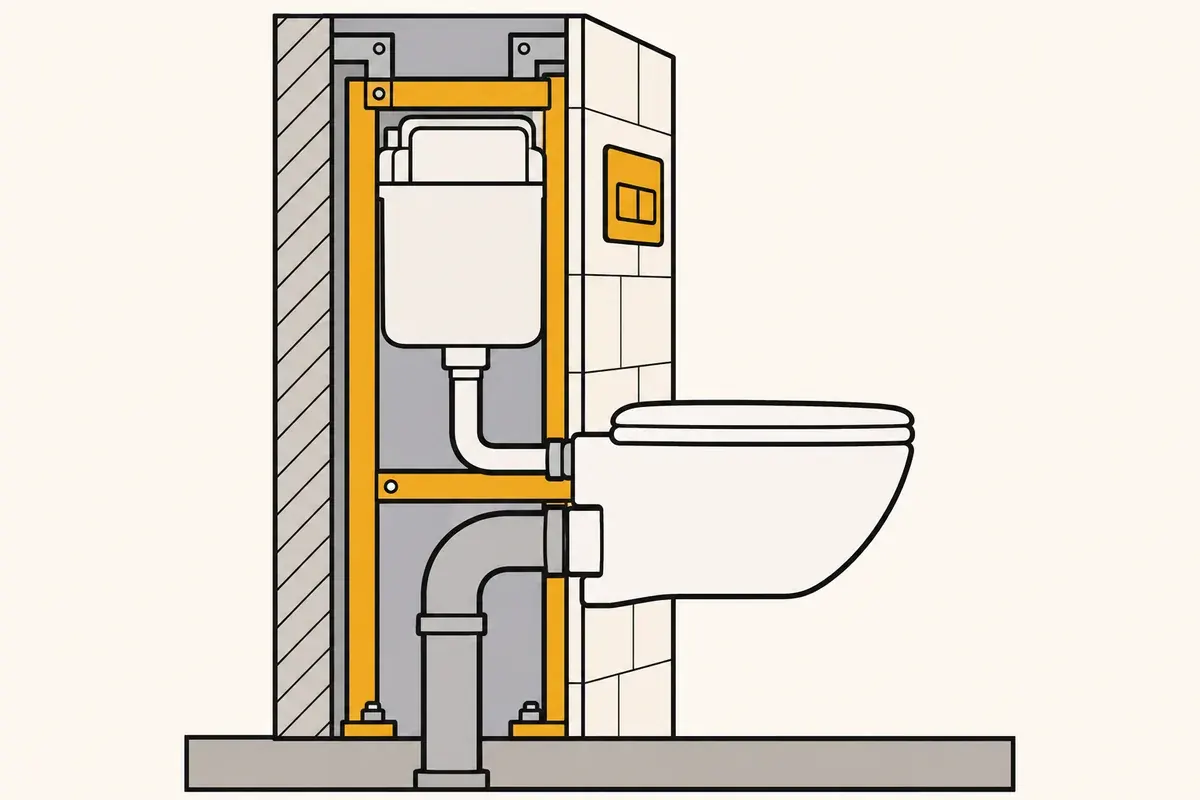
Wall-hung and concealed-cistern toilets come apart differently and depend on the frame. Do not cut into boxing without knowing what is inside.
Turn off and drain
- Close the valve and flush. The cistern should not refill.
- Sponge the remaining water out of the cistern.
- Push water out of the pan trap with a plunger or soak it up. Disinfect and keep it off your skin.
- Put a tray under the inlet and undo the supply nut, holding the fitting in the cistern still.
Remove any overflow pipe and note where it runs. The Wickes removal guide follows this order and advises having help to lift.
Take off the cistern
Screws may hold it to the wall, and wing nuts usually clamp it to the pan. Undo both in turn so the weight is never left on one bolt. If a nut and bolt spin together, hold the bolt head inside the cistern. Lift the cistern straight up, remembering the lid is loose, and stand it on a towel.
A cistern in an older property can be an asbestos cement product. HSE lists toilet cisterns among possible locations in homes. A grey or black, heavy, fibrous-looking cistern should not be broken, drilled or tipped until identified. Without training, do not repair or remove suspected asbestos; HSE suggests asking the local authority's environmental health officer.
Free the pan
- Lift the caps and remove the floor screws.
- Score any sealant round the base.
- If the outlet is cemented into a clay or cast iron collar, stop and assess. Forcing it can damage the drain.
- With a flexible or push-fit connector, rock the pan gently and draw it forward.
- Tip the pan back slightly so trap water stays in, then carry it out with a second person.
Seal and restore
Wipe around the soil socket and fit the plug. Do not push rags loosely into the pipe where they can fall. Cap the supply with a suitable fitting, turn the water on and check with dry paper. Sewer gas should not be left open into a room.
Inspect what is underneath
Check the floor for softness or staining, the soil socket for cracks and the connector for wear. Replace a used connector instead of assuming it will seal again. If the new toilet sits differently, plan the soil pipe connection before ordering.
Disposal
Ceramic is not household bin waste. Take it to a reuse and recycling centre that accepts it or arrange a bulky collection.
When to hand it over
Get help for a cemented outlet, a seized valve with no other isolation, a lead or cast iron pipe, a suspected asbestos part or a shared supply you cannot control. Explain which of these applies in the contact form and email photos of the base, the pipe behind and the supply valve.
Questions people ask
Do I need to cap the water pipe?
Yes, if the toilet is not going straight back. Use a fitting rated for water pressure, then restore the supply and check it.
What should cover the soil pipe?
A purpose-made plug is best. A well secured temporary cover keeps odours and debris out for a short period.