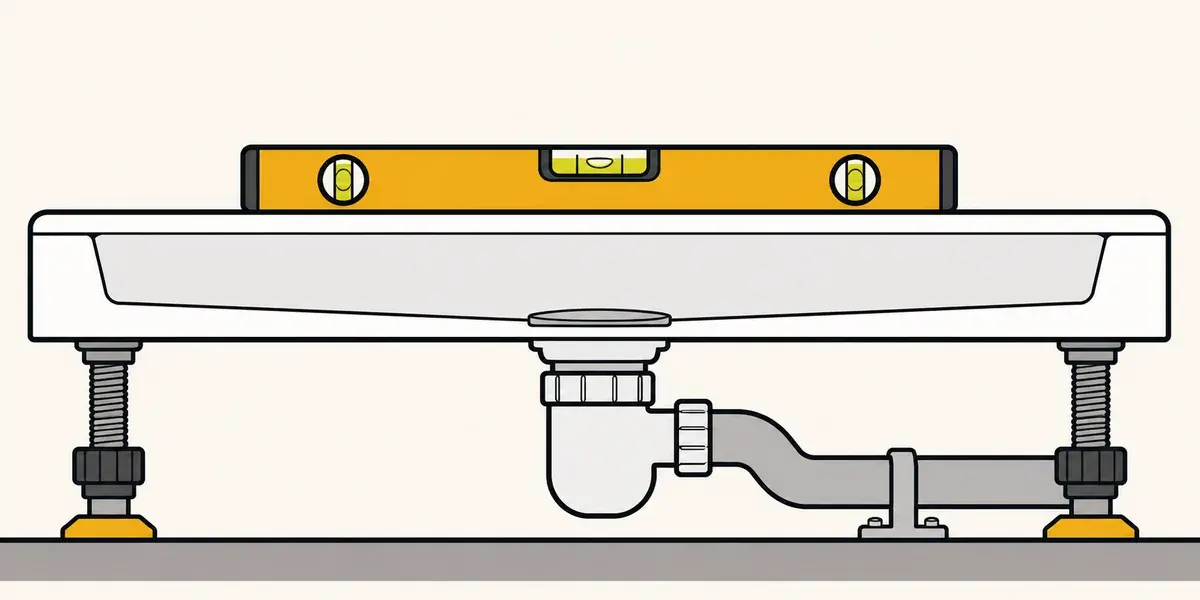
Compare shower tray types by material and height: acrylic, acrylic capped stone resin, low profile, raised and level, and what each needs under the floor.
Most shower trays are either plain acrylic or an acrylic surface over a stone resin core. Height is the other choice, and it matters more for plumbing: a low tray usually needs the waste pipe at or below floor level, while a raised tray gives room above it.
Materials
| Material | What to expect | Check |
|---|---|---|
| Acrylic | Light, easy to handle | Support under the base so it does not flex |
| Acrylic capped stone resin | Heavier, rigid core | Floor and handling |
| Ceramic | Hard glazed surface, heavy, limited sizes | Chipping and weight |
| Composite or solid surface | Varies by maker | Cleaning products and cutting rules |
Mira's buying guide describes acrylic as durable and light, and says an acrylic capped stone resin core resists bending or warping compared with standard acrylic. It is one manufacturer's account of its own market, so compare the specification and guarantee for any tray you consider. Names such as "composite" are used loosely.
Height
Level or very low. Mira gives a 25 mm depth for its Level range as an example. The step is small, but the trap and pipe sit lower.
Low profile. The same guide lists 40 mm for its low and safety ranges. Check that the trap will fit below it.
Deeper trays. Mira quotes 90 mm for its standard Flight range, with space for pipework in raised designs.
Raised on legs. Adjustable legs or a riser kit lift the tray and hide the waste under a panel.
Figures differ between makers. Read the dimension drawing, which should show both outside height and where the waste exits.
Shape and waste position
Square, rectangle, quadrant and offset quadrant trays cover most spaces. Some have a central waste and others a corner or side waste. The position decides where the trap falls relative to joists and the existing pipe. Handed trays come in left and right versions that are easy to confuse online. The size guide explains measuring.
Upstands and edges
A tray with upstands has raised edges that tiles or panels overlap, adding protection where walls meet. It needs more wall preparation. Some trays can have an upstand kit added.
Surface and slip
Anti-slip finishes are sold as an option or a specific range. Ask how the finish should be cleaned, since aggressive cleaners can damage it. Mira, for example, says its acrylic ABS Flight surface should not meet alkalis or organic solvents such as caustic soda or paint stripper.
Weight and support
A heavier tray feels solid but asks more of the floor and of whoever carries it upstairs. Acrylic is easier to move but relies on full support underneath. Whatever the material, follow the maker's bed or leg arrangement, because an unsupported corner is a common source of movement and failed edge seals.
Which suits which home
- Solid concrete floor: a raised tray avoids breaking the slab; a low tray may need a channel.
- Timber floor upstairs: low trays are possible if the pipe can run between joists without damaging them.
- Replacing a bath: a long rectangle often uses the space, with the waste moved.
- Mobility needs: level access designs help, but the whole floor and drainage design matters.
Questions before you order
- Which base does the maker allow: mortar, adhesive or legs?
- What trap and waste are required, and are they included?
- How much does the tray weigh, and can it get upstairs?
- What are the cleaning and cutting restrictions?
- Is the enclosure designed for this tray?
Once you have a shortlist, send the product link and floor type through the contact form and email a photo of the current waste. Fitting is covered on shower tray fitting.