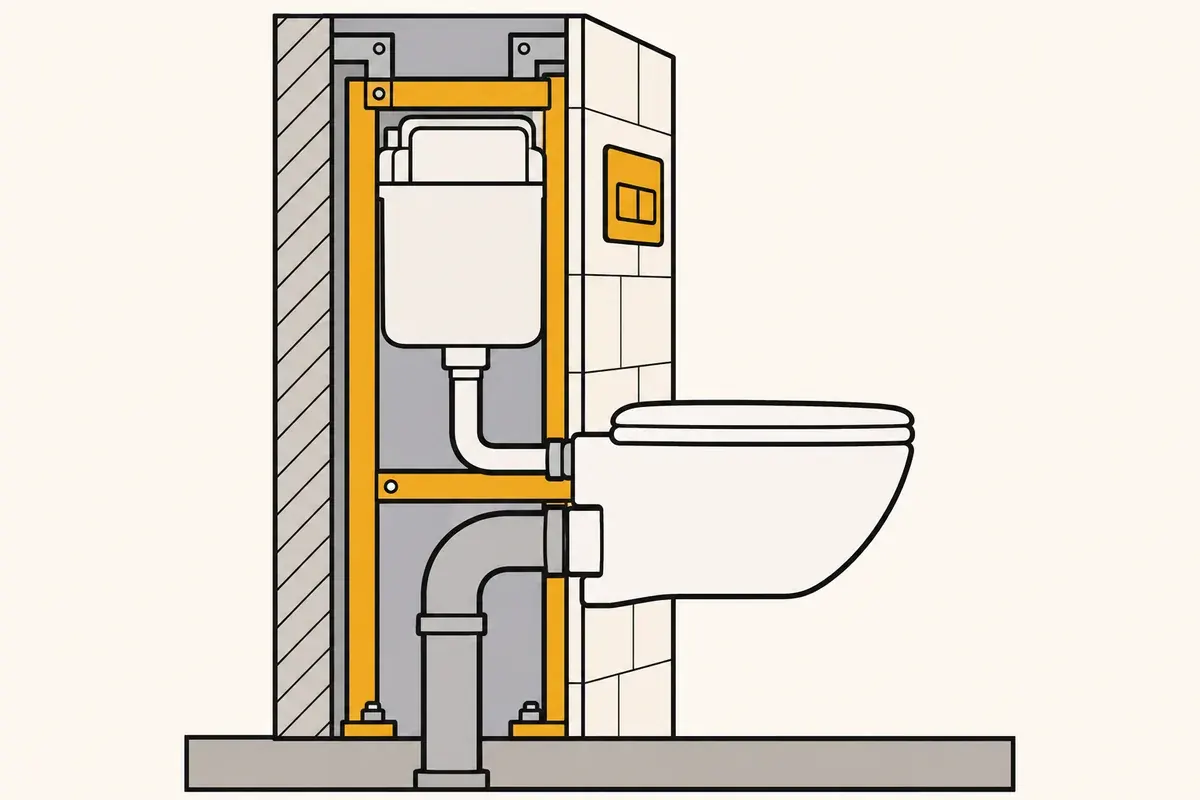
Toilet condensation on a cistern: how to tell it from a leak, cut bathroom moisture, stop a silent refill and protect the floor beneath the toilet.
Condensation appears when moist room air meets a cistern chilled by incoming cold water. Reduce the moisture, keep the bathroom evenly warm, and check that the toilet is not constantly refilling, which keeps the ceramic cold.
Confirm it is condensation
- Dry the outside of the cistern, the pipe, bolts and floor.
- Check again before anyone showers.
- Place dry tissue at the supply nut, under the bolts and at the join between cistern and pan.
- Look again after a shower.
| What you see | Likely source |
|---|---|
| Fine droplets across the whole outer surface | Condensation |
| One wet nut or bolt in a dry room | Leaking joint |
| Water only during a flush | Seal between cistern and pan or flush pipe |
| Moving water in the pan between uses | Cistern letting water through |
Food colouring in the cistern helps: coloured water on the floor points to a leak, while condensation stays clear.
Stop continual refilling
A cistern that leaks into the pan keeps drawing cold water, so it never warms. Hold dry paper against the back of the pan under the rim, wait without flushing, and see if it gets wet. Wessex Water describes this check and says a leaking toilet can waste around 200 to 400 litres a day. Fix the inlet valve or flush mechanism first.
Reduce moisture
- Run the extractor during and well after bathing. Clean its grille and test that it pulls air. For dwellings in England, Approved Document F gives 15 litres per second as the minimum intermittent rate for a bathroom.
- Open a window or leave the door open afterwards, subject to privacy and security.
- Close the shower screen to contain spray.
- Hang wet towels and laundry elsewhere.
- Shorter, cooler showers produce less vapour.
Keep the room temperature steady
A bathroom heated in bursts has cold surfaces when the steam arrives. Modest, steadier warmth and a radiator that actually heats help. If walls and ceiling also run with water, the room has a ventilation or insulation issue larger than the toilet.
Options aimed at the cistern
Internal liner. Closed-cell foam inside a ceramic cistern separates cold water from the outer wall. A liner must not touch the float or flush mechanism, and must be a material suitable for contact with the water. It is fiddly and best done with a product made for the purpose.
Anti-condensation mixing valve. Warms the fill slightly using the hot supply. It needs hot water nearby, backflow protection and correct installation, and it uses energy.
New cistern. Some are supplied lined. Check compatibility with the pan before buying.
Drip tray. Catches water while you address the cause. It treats the mess, not the moisture.
Fabric covers hold moisture against the ceramic and can become musty.
Protect the building
Persistent drips can lift flooring and rot timber. Wipe the surfaces, inspect around the pan base and under the room where possible, and check behind a toilet in boxed furniture for mould. A concealed cistern that sweats may be noticed only through damp panels.
A one-week record
Note for several days when the droplets appear, whether the fan ran and whether washing was drying indoors. A pattern that follows showers points to ventilation. A cistern wet in a cold, unused room points back to refilling or a leak.
When it is a plumbing job
Arrange help for a leaking supply nut, wet fixing bolts, a refilling fault you cannot trace or damp behind boxing. In the contact form, mention whether the water appears after showers, after flushing or all the time, then email photos. Fan wiring and structural damp are separate trades. For flush parts, see siphon replacement.
Questions people ask
How can I tell condensation from a leak?
Dry everything and watch. Condensation forms as a film over cold surfaces, while a leak starts from one joint or crack and appears even in a dry room.
Should I connect hot water to the cistern?
Do not improvise a hot feed. Any temperature mixing arrangement must be a suitable product installed to the water fittings rules.