Outside toilet installation or refit: check the foul drain, protect pipes from frost, plan water depth, lighting and ventilation, and confirm approvals first.
An outside toilet can be refitted or added where it can reach a foul drain, receive water that is protected from frost and be built to the rules that apply to your property. Replacing an existing pan and cistern is far simpler than creating a new facility.
Survey what exists
Look at:
- the pan outlet and where it enters the ground;
- whether the drain flushes freely;
- the water pipe's route from the house and any valve on it;
- walls, roof, door and floor;
- any light or heater and the condition of its wiring;
- possible asbestos before drilling: HSE lists cement roofs, pipes and toilet cisterns in buildings from before 2000.
Run a bucket of water through the old pan and watch the nearest inspection cover if you can lift it safely. If water backs up or never arrives, get the drain investigated before spending on fittings. A toilet must never discharge into a rainwater drain; Thames Water explains the problem with misconnected pipes.
Drainage for a new position
Approved Document H gives a WC branch a 100 mm minimum size for outlets over 80 mm. For a toilet at ground floor level, a branch straight into the drain is limited to cases where the drop from the floor to the drain is no more than 1.3 m. New drain runs need suitable fall, access and ventilation of the system, so ask building control before digging.
Where gravity drainage is impracticable, the same document describes pumping installations. A toilet with a macerator and small bore drainage is only allowed where there is also access to a toilet draining by gravity, according to Approved Document G.
Water and frost
The water fittings rules require fittings to be protected against damage from freezing, with underground fittings deep enough to prevent it. Certain pipes laid outside a building shallower than 750 mm or deeper than 1350 mm are on the water company notification list.
Practical measures:
- Lag every exposed pipe, valve and the cistern supply.
- Fit an isolating valve indoors, with a drain point on the outside branch.
- Choose fittings suited to an unheated space.
- In a long cold spell, shut off and drain the branch.
Thames Water's frozen pipe advice says a frosted pipe and a tap slowing to a trickle are signs of freezing, and to stop the water and thaw gently.
The pan and cistern
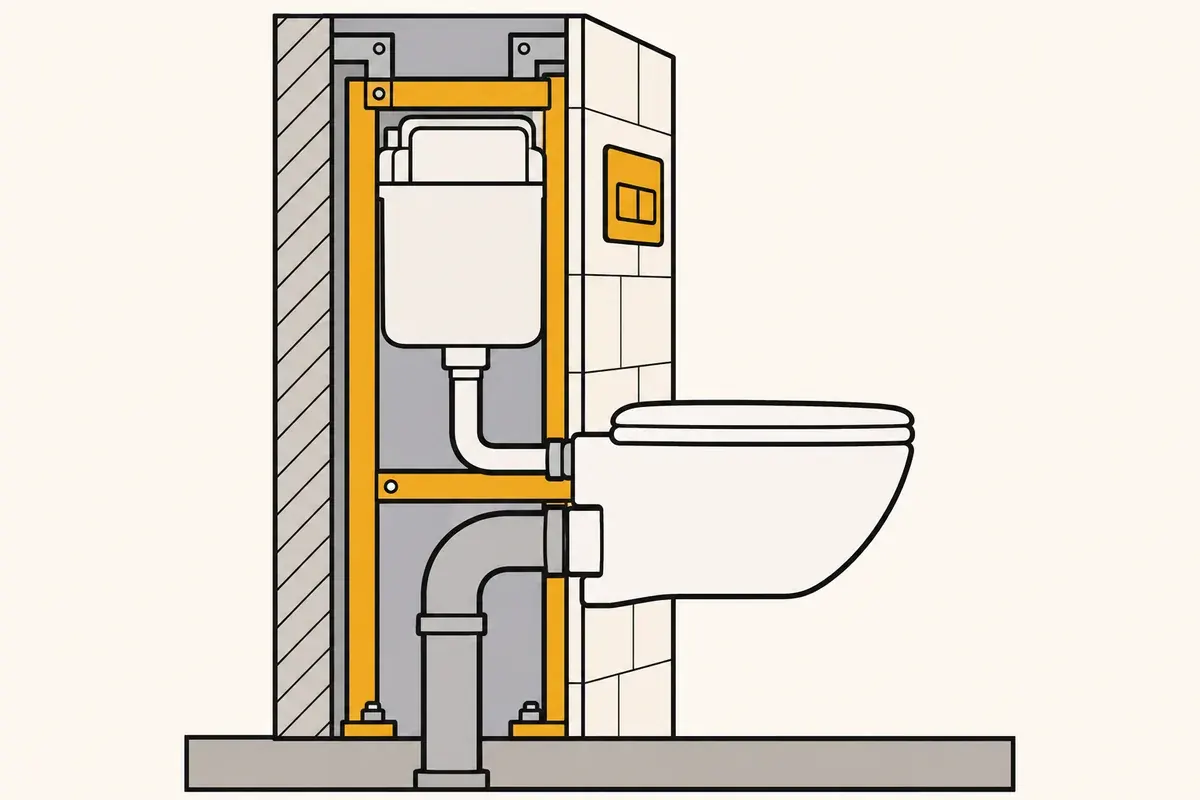
A close coupled suite is simple to service. A high level cistern keeps the traditional look but needs a sound wall. Match the outlet direction to the drain and fix the pan without cracking it. Do not set it in cement so hard that it cannot be removed.
Room, light and electrics
Consider a door gap or vent, a handwashing basin with its own waste and water, and a washable floor. Outdoor electrical work belongs to a registered electrician. If the building is to become a habitable room or an extension, further approvals may apply.
Before you order
Take photographs inside and out, measure outlet height and distance to the wall, and find the inside shut-off. Flats and leasehold houses may need consent.
To ask about the work, use the contact form saying whether this is a swap or a new toilet, then email the pictures. Drain clearing, building work and electrics are separate matters.
Questions people ask
Can an outside toilet be refitted as it was?
Often a like-for-like swap is possible if the drain and water pipes are sound. Check both before buying the pan.
How do I stop it freezing?
Lag exposed pipes, keep the cistern and supply protected, and be able to shut off and drain the branch in cold weather.