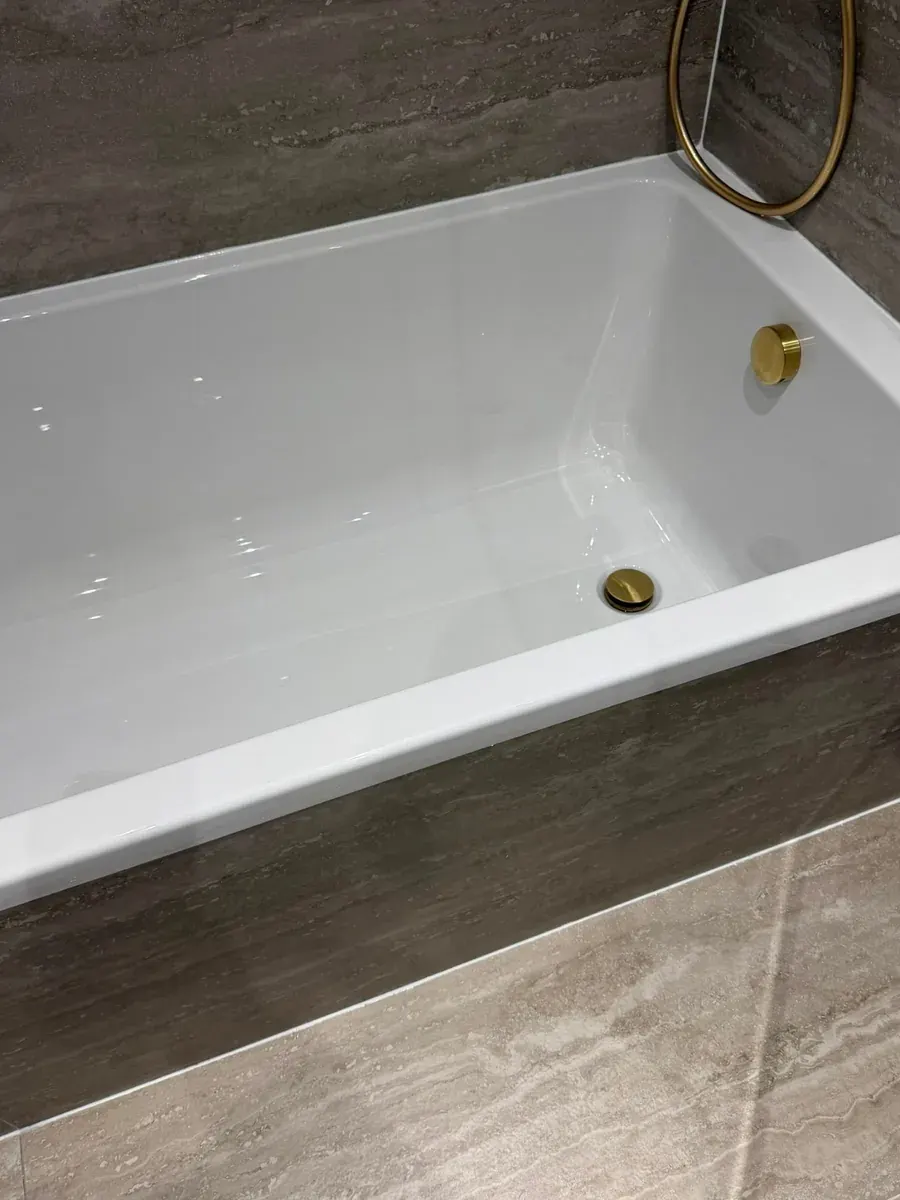
Bath tap centres measurement explained: measure hole centre to centre, check diameter, deck thickness and underside access, then match the new bath taps.
Bath tap centres are the distance between the middle of one tap hole and the middle of the other. Measure in millimetres from centre to centre and compare the figure with the new mixer's fixed or adjustable spacing.
Three ways to measure
| Situation | Method |
|---|---|
| Holes empty | Left edge of one hole to left edge of the other, if both are equal size |
| Pillar taps fitted | Centre of one body to centre of the other |
| Existing mixer | Measure the two legs underneath, or the base centres from its sheet |
The left edge to left edge method gives the same value as centre to centre for equal holes and is easier to read accurately.
What figure to expect
Many bath mixers are made around 180 mm. For example, a Bristan thermostatic bath shower mixer sheet gives 180 mm centres when deck mounted and 150 mm when wall mounted. Older baths, imported ones and special designs differ, so treat 180 mm as something to check and not as a promise. A mixer with adjustable legs states a range; stay within it.
Other measurements
- Hole diameter: old pillar tap holes and mixer legs must be compatible.
- Deck width: room for the tap base without overhanging.
- Thickness: deck plus any backing plate, against the tap thread length.
- Distance to wall: space for levers and the spout.
- Overflow position: spout flow should not strike it.
- Underside clearance: room for connections and a spanner.
Getting underneath
Remove the bath panel carefully, following panel fitting guidance in reverse. Look at the pipes: note size, whether there are isolating valves and how the old taps connect. If the end of the bath is against a wall, access may be tighter than the top suggests. Do not crawl under without support or lever on the bath.
Single hole and wall layouts
Some baths have one central hole for a mono filler, three holes for a deck set, or none, where taps come from the wall or the floor. A freestanding filler needs floor pipework instead. Do not assume a new mixer can span an unusual layout.
Mistakes to avoid
- Measuring the outer edges of tap heads.
- Reading the old product's nominal size without checking.
- Forgetting that a drilled bath may have holes slightly out of line.
- Ordering a wide bridge design for a narrow deck.
Drilling new holes
If a bath is undrilled, the maker marks areas suited to holes. Follow its template and use the correct cutter for acrylic or steel. Enamelled steel is often supplied pre-drilled because cutting damages the coating. Never guess the spacing: place the actual tap on a cardboard template first.
Record and compare
Write down centres, diameters, thickness and pipe size. Photograph a tape across the holes from directly above. Place the product drawing next to your notes and highlight any mismatch.
Wider deck sets and three-hole baths
Three piece sets have separate controls and a spout joined underneath by hoses, so there are several spacings to check, plus the reach of each hose. Their joints end up under the bath. Water rules say joints must not be concealed where nobody can get to them, so confirm that the panel gives real access before choosing one.
Help
Send the figures through the contact form and email the photos quoting your reference. Say whether the bath is acrylic, steel or cast iron, and whether the panel comes off.
If the spacing will not match
Check whether another mixer offers adjustable legs, or whether two separate taps would use the existing holes with no change to the bath. A deck plate may cover marks but cannot move a hole safely. Replacing the bath is the larger option and affects the panel, waste, tiling and pipe positions, so price it as a separate job before deciding.
Questions people ask
Do I measure edge to edge?
No. Measure from the centre of one hole to the centre of the other.
Can I measure with the taps fitted?
Yes. Measure between the centres of the two tap bodies, then confirm underneath.